

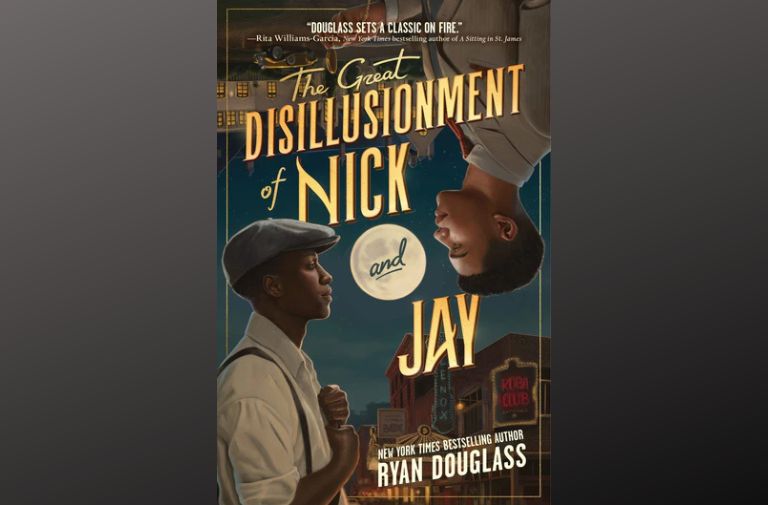
Check out our interview with Ryan Douglass, the author of "The Great Disillusionment of Nick and Jay."
What was your inspiration behind your most recent book?
"Nick & Jay" gave me the opportunity to reimagine a classic while introducing young readers to essential Black history. We’re living in a time when our history is being erased to avoid accountability for the past, and the fiction we read in high school plays a big role in how we understand the truth of human experience. Because Gatsby is often required reading, a century after its publication felt like the right moment to explore how much progress we’ve made in the U.S., and how much work there is to be done yet. This book is about romantic, social, and existential desire, and what it looks like to chase happiness when you are navigating intense stigmas and exclusion from society.
What does Reading Rainbow mean to you?
To me, Reading Rainbow means giving queer voices consistent space on your shelf and showing appreciation for narratives where queer people are allowed to find their power and live in their vulnerability on the page, even when it looks messy or not “market-safe.”
Why do you feel representation of a variety of people is so important when it comes to writing books?
Representation expands our understanding of the world, which is crucial for intellectual and empathic growth. When we only see narrow versions of life in literature and media, we internalize the idea that the world is more narrow than it actually is. So, diverse representation is about deepening truth, pulling away from reductive versions of truth. It both challenges the idea that any one version of living is universal and shows what of the human experience is truly universal.
Tell us a little more about the book and why you decided to write it.
"Nick & Jay" is a Gatsby reimagining set in the 1920s that follows 17-year-old Nick Carrington as he migrates to New York from Oklahoma and adapts to a new social environment, while learning who he is. It explores what it means to pull yourself out of tragedy and build a successful life, and to fall in love with someone unexpected in the meantime. I think centering teenagers really highlights how difficult it is to be navigating deeply personal emotions like longing, grief, and fear, in a world that demands constant ambition and forward motion.
What can fans expect from your book?
Readers can expect complex characters journeys, a lush historical atmosphere, and a love story that is complicated by the rigid norms of the past and hope for a better future. There are moments of glamour and joy, but also trauma and grit. Ultimately, it’s a story about the cost of chasing a dream that feels out of reach, and how personal success can be more meaningful than earning status in society.
What's up next for you in the bookish world?
I’m excited to have another YA horror on the way. I’m also drafting an adult novel — a near-future sci-fi that explores the prison system in the United States.