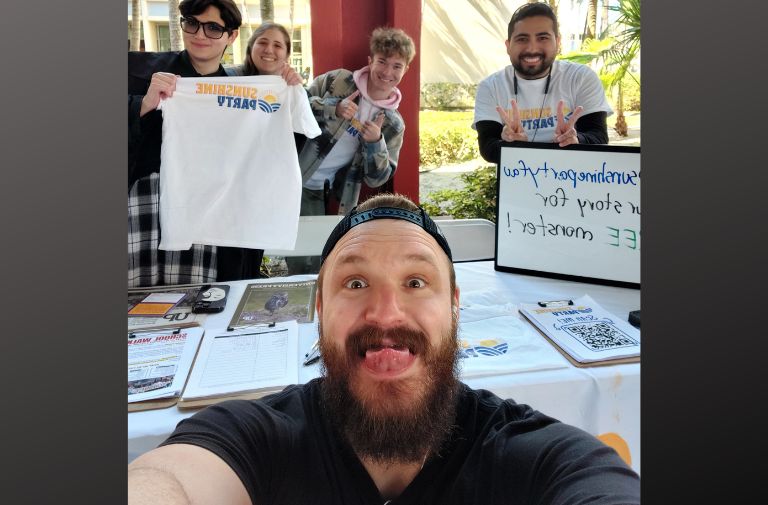
Students walking across the breezeway at Florida Atlantic University see campaign tables almost every semester. Posters promise transparency. Candidates promise representation. Slogans promise that Student Government (SG) will fight for the student body. For many students, however, those promises have begun to feel distant from their everyday experiences on campus.
A recent letter to the editor in FAU’s University Press, written by SG Jupiter Senator and Sunshine Party Chair, Caroline Ribeiro, voiced a concern that many students quietly share. She argued that SG has drifted away from the practical needs of ordinary students and has become influenced by outside political networks and organized funding that shape elections before most students even vote. Instead of focusing on issues such as parking, library hours, classroom resources, and support for student organizations, the system can feel dominated by money, branding, and connections. The Sunshine Party was created in direct response to those frustrations.
Rather than relying on outside interests or large political machines, the Sunshine Party centers its mission on student-first representation. Its goal is simple and local: put students back at the center of campus decisions. That means campaigning on everyday concerns that affect commuters, residents, first-generation students, and club leaders. It means listening to classmates, not outside donors. It means building a government that is transparent about spending, accessible to students, and focused on results that can be felt across campus.
Where Ribeiro’s letter describes an uneven playing field shaped by money and professional marketing, the Sunshine Party emphasizes grassroots involvement. Volunteers, conversations, and peer-to-peer outreach are meant to power campaigns. The belief is that leadership should come from students who understand the campus because they live it every day, not from groups with resources beyond the university.
The connection to Ribeiro’s letter is clear. Her warning highlights what happens when representation becomes detached from the people it is meant to serve. The Sunshine Party wants to correct that disconnect by returning SG to its original purpose. Instead of treating elections as stepping stones or political contests, the party treats them as opportunities to solve real problems: more commuter parking, longer study space hours during exams, clear funding for student organizations, and better communication between students and administrators. These are not abstract debates, but daily realities.
The Sunshine Party also pushes transparency and accountability. Students should be able to see where their fees go, how budgets are allocated, and why decisions are made. When students understand the process, trust grows. When leaders remain visible and accessible, participation increases. A representative government only works when students feel that their voices matter.
Ultimately, the Sunshine Party represents a shift in focus from external influences to the campus community. It reflects the same concern raised by Ribiero while offering a constructive path forward. If SG is meant to be the closest form of democracy students experience, then it should look and feel like the student body itself. The message is straightforward: Student Government should belong to students — and the Sunshine Party exists to make sure it does.
Check out The Sunshine Party here: https://www.instagram.com/sunshinepartyfau/
Sign up for the OutFAU newsletter here. Follow us on Instagram: @outfau.