
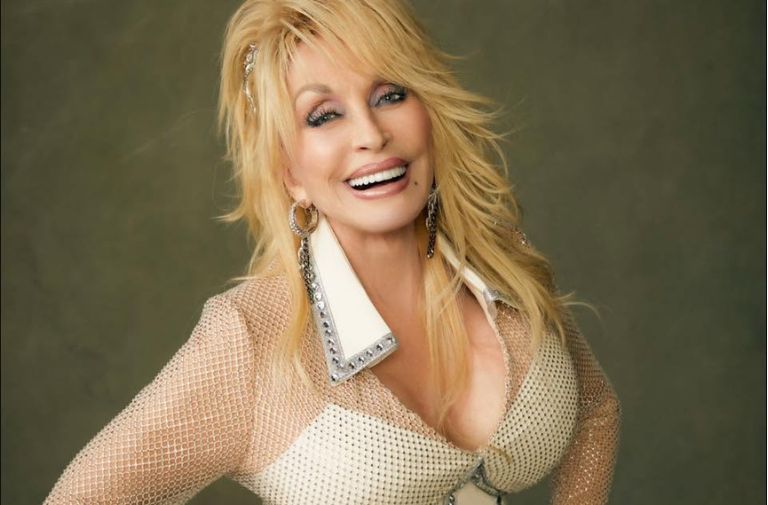
Dolly Parton was around six when she wrote her first song: "Little Tiny Tasseltop," about her corncob doll with corn-silk hair. "I loved that little doll," Parton later wrote. "I expressed myself and my feelings through writing - I’m sure what I was thinking was, 'Well, Tasseltop has to have a song about her.'" Parton never stopped making music after that.
The beloved singer, songwriter, and actress, died on Tuesday at 80 years old.
Brian Seaver, Parton’s nephew and her head of security, announced her passing on Dolly’s official Facebook page on Tuesday, Aug. 25. He said, “This is a time of sadness for us, but for Dolly, for she lived in the light. Dolly opened doors for singers, songwriters, musicians, and dreamers from every walk of life and across every continent. By her example we believed that anything was possible. She never saw a door she couldn’t open, and the doors she opened made and changed history.”
Parton had recently revealed health issues in an article in People Magazine. The ten-time Grammy winner said some of her symptoms began while she was caring for her late husband, Carl Thomas Dean, who died in March 2025.
Her first album, “Hello, I'm Dolly,” was released in 1967, kicking off a career that would span 60 years and include 50 studio albums, sold-out concert tours, and a career in film and on Broadway. Over the years she won 11 Grammy Awards, three Emmy Awards, six Golden Globe Awards, and a Tony Award, as well as nominations for two Academy Awards, including a humanitarian honorary Oscar win in 2025. On top of that she opened her own theme park, Dollywood, to give people in her hometown of Pigeon Forge, Tennessee, employment.
Parton supported many charitable efforts, particularly in the area of literacy, primarily through her Dollywood Foundation. Her literacy program, Dolly Parton's Imagination Library, was founded in honor of her father, who never learned to read or write. It mails one book per month to each enrolled child from the time of their birth until they enter kindergarten. In February 2018, she donated her 100 millionth free book, a copy of her children's picture book “Coat of Many Colors,” to the Library of Congress.
In December, she pledged $500,000 toward a proposed $90 million hospital and cancer center to be constructed in Sevierville. She also held a benefit concert to raise additional funds for the project. That same year, Parton and Emmylou Harris allowed use of their music in a PETA ad campaign that encouraged pet owners to keep their dogs indoors rather than chained outside. Parton raised nearly $9 million dollars for relief for those affected by the Great Smoky Mountain wildfires. Parton also donated $1 million toward COVID-19 research.
In December 2006, Parton pledged $500,000 toward a proposed $90 million hospital and cancer center to be constructed in Sevierville. She announced a benefit concert to raise additional funds for the project. The concert played to about 8,000 people. That same year, Parton and Emmylou Harris allowed use of their music in a PETA ad campaign that encouraged pet owners to keep their dogs indoors rather than chained outside. Whitney Houston’s cover of Parton’s song, “I Will Always Love You,” earned her nearly $10 million in royalties. She used that money to help reinvigorate a historically Black community in Tennessee, opening an office, bringing jobs and economy to the neighborhood.
Though her public stance was politically neutral, she was a strong supporter of LGBTQ rights. She came out in support of marriage equality in 2009 and vocally opposed the anti-trans legislation that took place in Tennessee in 2023.
She was also known for her physical attributes and numerous plastic surgeries. When questioned about it, Parton replied, "It takes a lot of money to look this cheap.”
Always in on the joke, she was once quoted as saying, “If I wasn’t born a woman, I’d be a drag queen.” One event, recalled in her 2012 memoir, “Dream More: Celebrate the Dreamer in You,” typifies Dolly’s attitude about her public persona.
She entered a Dolly look-alike contest at a gay bar on Santa Monica Blvd., near her home in West Hollywood. Parton did not identify herself as the real Dolly Parton when she arrived at the bar. Along with her fellow competitors, she was handed a number and told to line up. As they sashayed one-by-one across the stage, the contestant who received the loudest audience applause would be declared the winner. While the audience at the bar went crazy for the other Dollys in the contest, they didn't have quite the same response when she appeared, “So, I just got in the line and I just walked across [the stage] and they just thought I was some little, short gay guy. And I got the least applause, but I was just dying laughing inside.”
All of which made her beloved by the LGBTQ community. She never wavered in her support of the community., saying, “If you’re gay, you’re gay. If you’re straight, you’re straight. And you should be allowed to be who you are,” and “I have a huge gay and lesbian following and I’m proud of ‘em, I love ‘em. I think everybody should be allowed to be themselves, whoever they are.”
She was quoted on the Larry King show as saying, “I think we should be accepting and loving. We are all God's children... If you're the fine Christian you think you are, why are you judging people? That's God's job. We're not God. We're not judges.” When North Carolina passed anti-LGBTQ laws, HRC ran posters with Dolly and a quote from her, “I think everyone should be treated with respect…I hope everyone gets a chance to be who they are.
Farewell Dolly, we will always love you.