“The Democrat Party in Florida is dead.”
Those were the words of Jason Pizzo, then the Democratic leader of the Florida Senate, when he dramatically abandoned the party in April 2025.
He wasn’t alone in jumping ship.
Just months earlier, two Democratic state representatives, Susan Valdés and Hillary Cassel, had switched to the Republican Party shortly after winning reelection as Democrats.
At the time, it certainly looked like Florida Democrats were on life support.
What a difference a year and a half can make.
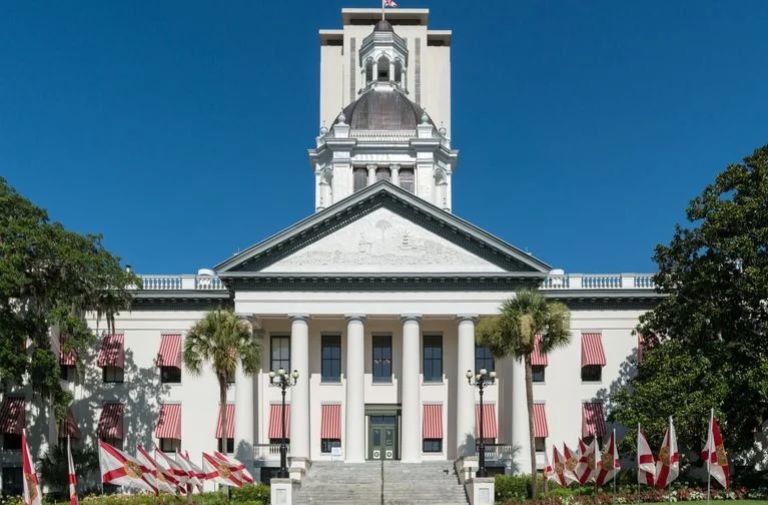
In the 2026 midterms, Democrats reclaimed both House seats lost to those party defections, broke Republican supermajorities in both chambers of the Legislature and delivered their strongest Florida House showing since 1996.
And they did it while losing every statewide race, including governor and U.S. Senate.
The losses of David Jolly and Angie Nixon certainly sting, but their strength also helped lift the entire party. Just four years ago, Gov. Ron DeSantis won reelection by nearly 20 percentage points. This year, Jolly lost by just 1.3 points.
Yes, they both lost. But if you only focused on those races, you missed a remarkable political comeback.
Before the election, Equality Florida identified breaking the Republican supermajorities in the Legislature as one of its core goals. Even that seemed like a long shot when OutSFL interviewed the organization over the summer.
But Democrats did it. And more.
In the House alone, Democrats broke two Republican supermajorities. The first, a two-thirds majority, allows lawmakers to override a governor’s veto, raise state taxes and fees, expel members and fast-track legislation. The second, a three-fifths majority, allows lawmakers to place proposed constitutional amendments directly on the ballot.
Those are not insignificant victories.
Republicans went into the election with overwhelming control of the Legislature. They emerged with just 70 of the House's 120 seats, down from 83 immediately before the election.
This is important in a state where the Republican-controlled Legislature has spent years targeting the LGBTQ community.
And voters delivered another message. A historic number of LGBTQ candidates won races across Florida.
Among them was Quinnie Pérez, who became the first openly transgender person elected to public office in Florida, winning a seat on the Orange County Soil and Water Conservation District. Meanwhile, voters in Wilton Manors elected an all-gay commission.
Think about that.
This is the same state where lawmakers passed the so-called “Don't Say Gay” law, restricting classroom instruction about sexual orientation and gender identity. The same state that started a war on rainbow crosswalks. The same state that attempted to severely restrict drag shows and where lawmakers have repeatedly targeted the display of Pride flags at government buildings.
Yet voters across Florida elected LGBTQ candidates to represent them.
These victories don't erase the damage those laws have caused. They don't mean the attacks will stop. But they do demonstrate that Florida's LGBTQ community is not retreating.
And neither are Florida Democrats.
Florida did not turn blue on Election Day. But it is no longer ruby red, either.
That is worth celebrating. But the work is far from over.
If Democrats want to build on these victories and expand their influence across the state, they need to start now. Florida is a big state. An expensive state. And building a winning political operation takes time, money and organization.
In just two years, voters will head back to the polls. Control of the Legislature will once again be up for grabs, and the presidential election will bring Florida back into the national spotlight.
Hopefully, national Democratic leaders will recognize what happened here and reinvest in the state.
Because Florida Democrats have something they haven't had in years: momentum.
Now they need to prove they can sustain it.