
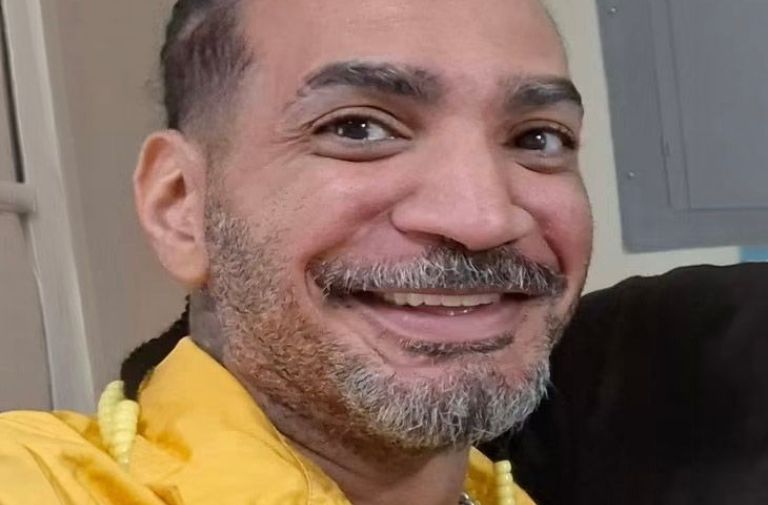
On July 20, 2022, Ricky Green walked into what he believed would be just another court-ordered treatment program—another obligation to complete, another box to check before returning to the life he knew.
Instead, it became the day everything changed.
He hasn’t used drugs since.
Today, Ricky Green marks four years of sobriety. He works inside a treatment center helping others find their way out of addiction, sponsors seven men in recovery, and is steadily rebuilding a life he once believed was permanently lost.
But the road to this moment was anything but simple. It was a journey marked by survival, heartbreak, illness, addiction, and moments where hope itself nearly disappeared.
Born on December 23, 1978, in Hollywood, Florida, Ricky’s childhood was shaped by instability and fear. At just 15 years old, he left home and never truly returned. Too young to be on his own, he moved between shelters, temporary jobs, and unstable housing, doing whatever he could to survive.
Even as a teenager, Ricky carried a burden few his age could understand. Growing up in a time when LGBTQ plus acceptance was rare and judgment was common, he struggled to hide his identity while also trying to find a place where he belonged. Safety was never guaranteed, and stability was always temporary.
Still, he pushed forward.
He found refuge at Covenant House in Fort Lauderdale, earned his GED, and eventually secured his first job at Nathan’s Famous in the Galleria Mall. For a time, it seemed like life might finally be turning in a better direction. He worked, rented rooms, bought his first car, and even built a career as a DJ in South Florida’s nightclub scene.
But just as things began to stabilize, everything changed again.
At 22 years old, Ricky received a diagnosis that would alter the course of his life forever. His immune system had collapsed. Doctors told him he had full-blown AIDS, and his T-cell count had dropped to just three. He was given a matter of days to live.
Against all odds, he survived.
But survival came with new challenges.
After stopping alcohol due to his medications, Ricky was introduced to drugs that would eventually take hold of his life for the next two decades. What began as occasional use slowly became dependency, and then addiction. Crystal meth became central to his existence, pulling him deeper into a cycle he could not easily escape.
Over the years, addiction stripped away nearly everything he had built. He experienced homelessness again. He lost his teeth due to severe infections. Relationships collapsed. Jobs disappeared. And hope—once fragile but present—began to fade.
“I always thought I could stop whenever I wanted,” Ricky has said. “I just never did.”
The turning point came in 2022, but not in the way he expected.
After his father passed away following a long hospitalization, Ricky was devastated. Already facing legal trouble and emotional collapse, he wrote a suicide note. He believed his story was over.
But before he could act on that decision, he was arrested for violating the conditions of his release after a failed drug test.
What felt like the end of everything became, unexpectedly, a beginning.
On July 20, 2022, Ricky entered treatment—initially not by choice, but by requirement. He planned to complete the program, avoid prison, and return to the life he knew.
But something unexpected happened inside those walls.
He met people who saw him not as a case file or a failure, but as someone worth saving.
At a recovery convention in Florida, Ricky was introduced to Eric Valentin and Jeffrey Jackson, two men who would become pivotal figures in his life. What began as a simple invitation to breakfast turned into a moment of connection that shifted his entire perspective. To this day, Eric and Jeffrey are best friends and supporters to Ricky. They saved his life.
For the first time, Ricky saw what recovery could actually look like—not just abstinence, but community, accountability, and hope.
“It was the first time I truly fought to do something that would make my life better,” he said.
From that point forward, something inside him began to change.
Recovery was no longer just something he was being forced to do. It became something he wanted to do.
Today, Ricky lives by a simple but powerful principle: “It’s okay to think about using. It’s not okay to pick up.”
That mindset has carried him through four years of sobriety.
In that time, he has rebuilt his life piece by piece. He recently paid off his car years ahead of schedule, restored his credit, and is preparing to move into independent housing. More importantly, he has dedicated his life to helping others do what he once thought was impossible.
At the treatment center where he works, Ricky now stands on the other side of the very system that once helped save him. He listens, he guides, and he shares his story with those who are still in the darkest moments of their lives.
He currently sponsors seven men in recovery, offering the same support and encouragement that once helped save him.
Ricky is honest about his imperfections. He doesn’t claim to have it all figured out.
“I still have my flaws,” he says. “The difference is I don’t use drugs to escape them anymore.”
That honesty is what makes his story resonate so deeply.
Because recovery, as Ricky proves, is not about becoming someone new.
It’s about becoming yourself again.
For those still struggling, still lost, or still believing it’s too late, Ricky Green’s life stands as something powerful: proof that no matter how far someone falls, change is still possible.
Not overnight.
Not easily.
But absolutely.
From a homeless teenager on the streets of Florida… to a man given days to live… to someone who spent 20 years trapped in addiction… to a man now helping others find their way out.
Ricky Green is living proof that redemption is real.
And sometimes, it begins on the very day you think everything is over.
Bobby Blair is a former professional tennis player in the 1980s. Blair is a LGBTQ media pioneer, Executive Director of the Community Media Advocacy Network, and Publisher of Hotspots Magazine and Perks Plus VIP community mobile APP. He lives in Fort Lauderdale with his partner, Brian Neal. A Fort Lauderdale, Florida native.