

Deciding how to wear two significant rings on your hand can raise practical and emotional questions. Each piece marks a different point in a couple’s story, from a promise of marriage to a formal lifelong commitment. Traditional etiquette offers a familiar arrangement, but the shape of a person’s finger, setting height, work demands, and personal preferences also matter. The right choice should feel comfortable, secure, and meaningful during the ceremony and in daily life.
Before a ceremony or fitting, many couples look for answers to whether they should wear the engagement ring or wedding ring first. The traditional solution is to wear the wedding band first, with the engagement ring following it. This order reflects the marriage band as the lasting commitment, while the engagement jewel represents the promise that preceded it. Tradition provides a useful starting point, although it does not dictate every couple’s final decision.
The Traditional Ring Order
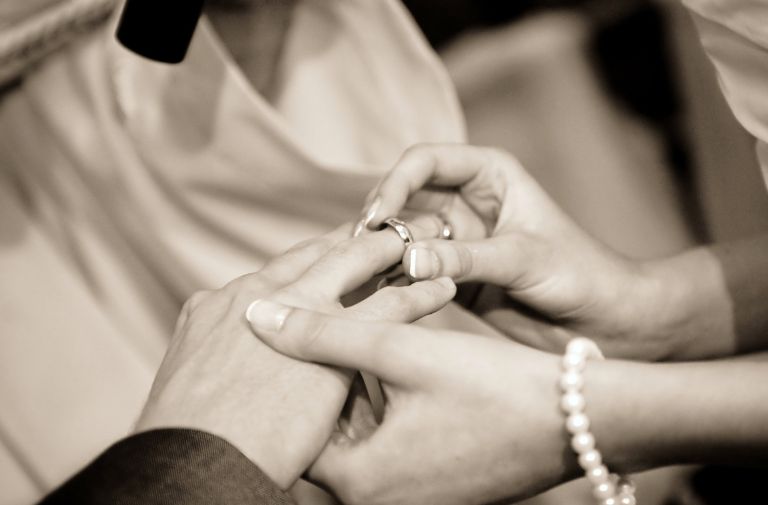
Wedding bands usually sit closest to the palm, with engagement rings positioned above them. The sequence follows the order in which commitments occur. During the ceremony, the band enters the left ring finger first. Afterward, the engagement ring is worn above it. This stacking method creates a familiar profile and keeps the marriage band nearest the heart.
Why the Left Hand Matters
The left ring finger became associated with marriage through an ancient Roman belief about a vein leading directly to the heart. Modern anatomy does not confirm that connection. Nevertheless, the idea shaped centuries of European custom. Today, many couples continue the practice because its symbolism remains recognizable, while other traditions place wedding jewelry on the right hand.
Ceremony Placement
-
A Simple Wedding-Day Routine
Some couples move the engagement ring to the opposite hand before vows begin. The wedding band can then slide onto the left finger without another piece blocking its path. Once the ceremony ends, the engagement ring returns above the band. This approach preserves customary symbolism, but couples may use another method if it better suits their ceremony.
Everyday Wear
For regular use, many people keep the same stacking order chosen during the wedding. In such cases, the wedding band beneath the engagement ring can create visual balance and keep the sequence easy to remember. Some wearers reverse the pieces because the arrangement feels steadier. Others separate the jewelry based on the activity undertaken. For instance, they may follow different rules for work, exercise, travel, or household tasks.
Comfort and Fit
Apart from tradition, physical comfort deserves equal weight. The circumference of a person’s finger changes with temperature, activity, and fluid retention. Ring width, metal thickness, setting height, and interior shape can also affect pressure. Trying both arrangements helps identify potential pinching, spinning, rubbing, or uncomfortable gaps. A qualified jeweler can assess fit before resizing or altering either piece.
Matching Different Designs
Two rings may look coordinated yet fit poorly together. Straight bands often work well with simple solitaire settings. Curved bands may suit lower profiles or pronounced center stones. Side diamonds, raised shoulders, milgrain edges, and unusual contours can change how the pieces align. Checking the stack from both the top and the side helps reveal contact points that photographs may conceal.
Personal Preference Matters
No single rule determines how a couple must wear their jewelry. Some prefer the traditional order because its meaning feels established and reassuring. Others place the engagement ring first because its design looks better there. Some people wear the rings on separate hands, while some may occasionally opt for solo wear. Even the idea of wearing a single daily band is also reasonable. Meaning comes from commitment, not from rigid placement.
Cultural and Lifestyle Choices
Family customs, religious practices, and regional traditions may influence the placement of rings. A couple might follow a parent’s example or establish a pattern that reflects shared values. Occupation creates another consideration. People who handle equipment, chemicals, food, or heavy materials may remove one piece during work. Frequent travelers may also choose simpler wear for convenience and security.
Care and Maintenance
Regular inspection protects both pieces, regardless of their order. Jewelry should remain secure without causing pressure, numbness, or persistent skin irritation. Loose stones, worn prongs, deep scratches, and sharp edges require prompt professional attention. Cleaning can expose small defects that are difficult to see at home. Soldering two matching rings offers stability, while separate pieces provide greater flexibility.
A Meaningful Final Choice
The customary arrangement places the wedding band closest to the hand and the engagement ring above it. That sequence honors a clear progression from promise to marriage. Yet comfort, culture, design, and routine may justify another choice. Couples can test both positions, observe movement during daily tasks, and select the arrangement that feels natural without diminishing either symbol.
Conclusion
The wedding ring traditionally goes first, nearest the hand, while the engagement ring rests above it. This placement reflects the order of a couple’s commitments and feels familiar during ceremonies. Still, tradition should work alongside comfort, anatomy, design, culture, and lifestyle. Couples may choose another arrangement without weakening its meaning. The best position keeps each piece secure, wearable, and connected to the relationship it represents.
The views, opinions, and recommendations expressed in this article are solely those of the author and are provided for informational and editorial purposes only. They do not constitute professional advice and should not be relied upon as such. OutSFL makes no representations or warranties regarding the accuracy, completeness, or applicability of the content and assumes no liability for any actions taken based on it. The views expressed do not necessarily reflect those of OutSFL.