

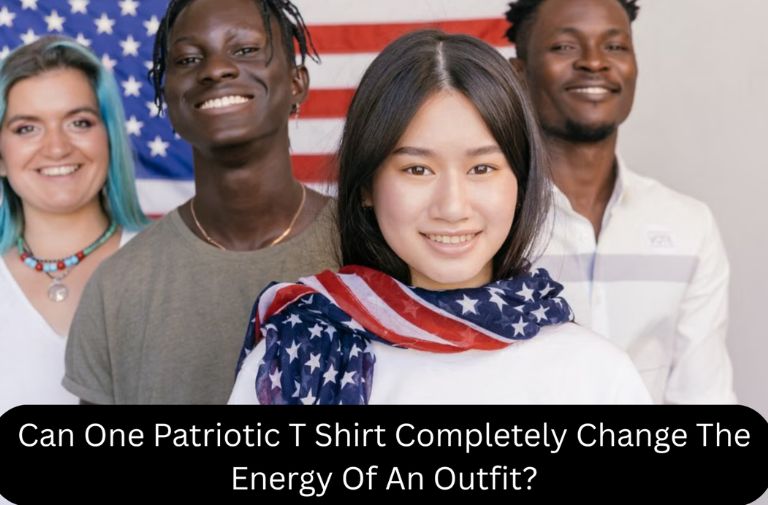
While the patriotic T-shirt might appear to be a basic casual piece, its colors, symbols and message can impact the way an outfit feels and the way a wearer feels in it. The right shirt can influence mood, confidence and social perceptions, going beyond the usual implications of an outfit.
If a suit is out of place or out of date, one will usually change the colour, add accessories, or choose a garment that reflects personal beliefs and personality. These modifications can help the wearer appear more confident and included, and convey a message without words.
A patriotic T-shirt can do just that when color, symbolism, fit, and style come together. This article will dive into the power of color psychology, identity signaling, emotional impact, and intentional styling to shift the vibe of any outfit with just a tee.
The Science Of Clothing and Mood
To understand how certain symbols can shape our perception, it helps to know the psychological and neurological processes that connect what one wears with how one feels.
Enclothed Cognition Explained
Enclothed cognition is the methodical way in which clothes shape the way the wearer thinks.
Traditional behavioral research has shown that subjects wearing a ‘Superman' T-shirt are perceived as being more physically strong and confident.
This is enhanced by symbolic meaning. Wearing patriotic T-shirts can subconsciously imbue you with characteristics such as loyalty, bravery, and resilience.
In fact, a school report found that deliberate dress tied to specific authoritative attributes can influence behavior, leading to higher effectiveness, confidence, and focus in daily life.
Dopamine Dressing and Emotional Regulation
Dopamine dressing" is the conscious wearing of a specific style to stimulate the release of "feel-good" neurotransmitters.
Enlivening colors and symbols can enhance energy levels and reduce social avoidance on their own.
This process also centers on comfort and fit. To maximize these psychological benefits, you need physical comfort.
Color Psychology of Patriotic Hues
A systematic review of color-emotion correspondences found consistent relationships between colors and emotional states. Here are a few:
- Red (Energy, Confidence, Attention): Red can physically raise heart rate, creating a sense of vitality and urgency. It can feel courageous in patriotic contexts and more intense in contexts that make the wearer feel bolder.
- White (Purity, Clarity, and Approachability): White represents moral clarity and simplicity. It complements red's intensity without overpowering the outfit or making it look too dirty.
- Blue (Trust, Calm, and Reliability): The review confirmed that blue is always calming and arouses low levels of emotion. It makes designs feel more stable and reliable and slows metabolism.
The 60-30-10 Rule in Patriotic Styling
Use the 60-30-10 Rule of Color to create a balance of color to prevent overwhelming, but to have a strong emotional impact:
- 60% Base: A basic colour, such as a dark navy T-shirt.
- 30% Secondary: Neutral accents such as white shorts or chinos.
- 10% Pop: A strong accent, like red shoes, or an accent on the hat.
Identity, Belonging and Social Signaling
Clothing can be a visual language of our inner values, conveying them to the outside world and reminding us of them.
Clothing as Identity Reinforcement
Wearing patriotic symbols in public strengthens the individual's sense of group belonging and values. It can increase state self-esteem when the wearer feels they are participating in the symbol's meaning. It can measurably increase state self-esteem when the wearer feels "in" the meaning of the symbol.
The Halo Effect in Social Perception
As much as 90% of a first impression is via color and clothing. Dressing patriotically can produce a “halo effect,” making you appear credible, likable, and like them.
Context Matters: When Patriotism Resonates
- High-impact settings: These symbols are typically used in high-impact situations like national holidays, community events, and sporting games.
- Low-impact or risky settings: Highly formal work settings or international settings can lead to misinterpretations. You may need a more complicated solution.
Real World Styling Scenarios
Here are some examples that show how this works in practice:
- Casual Weekend Look: Red-white-and-blue T-shirt, neutral chinos, and clean white sneakers.
- Energy shift: From “low-key” to “approachable and spirited”
- Family Gathering or BBQ: Grab a canvas hat and wear a patriotic T-shirt under an unbuttoned denim shirt.
- Energy shift: From “generic casual” to “festive and involved.”
- Community Event or Parade: Rock a patriotic tee with matching accessories like themed socks or a bandana.
- Energy shift: From “witness” to “participant and celebrant.”
Limitations and Considerations
Even the strongest psychological styling tools require care and attention so they don't tip you from “expressive” to “overwhelming.”
Visual Noise and Oversaturation
If many elements clash, they can reduce an outfit's impact, turning it into something more like a costume than chic. Balance and intention are key.
Cultural and Contextual Sensitivity
Patriotic symbols aren't universally understood, and each carries different significance across cultures and contexts. It is best to "read the room" (and the outfit) before setting the visual volume.
Personal Authenticity vs Performance
Dopamine dressing is being true to oneself to reap a psychological reward. Patriotic apparel that shows up for the show, not the belief, will be counterproductive to confidence-boosting. Choose patterns that you love.
Conclusion
A patriotic style T-shirt is a practical psychological tool, a clear identifier, and a strong social signal.
The clothing we wear can shape our interactions with the world around us through color psychology, enclothed cognition, and symbolic meaning.
With purpose, the right patriotic tee can transform an outfit from drab to dynamic, uninvolved to engaged, and even neutral to proudly partisan.
The views, opinions, and recommendations expressed in this article are solely those of the author and are provided for informational and editorial purposes only. They do not constitute professional advice and should not be relied upon as such. OutSFL makes no representations or warranties regarding the accuracy, completeness, or applicability of the content and assumes no liability for any actions taken based on it. The views expressed do not necessarily reflect those of OutSFL.