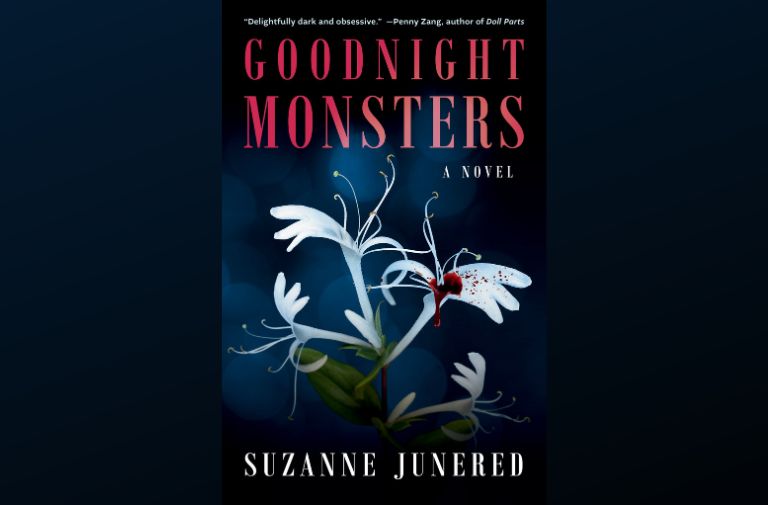
Check out our interview with Suzanne Junered, the author of "Goodnight Monsters."
What was the inspiration behind Goodnight Monsters?
My novels always start with questions: Is it okay to have bad thoughts without acting upon them? Do bad thoughts make us bad people? And what might push us to the edge where those thoughts turn to action? The initial spark for the story was wanting to write about a woman who had murderous fantasies but knew she would never act them out. During my first draft, I was struggling in dark, postpartum days, and the instability, anger, and confusion I felt were written into this character.
What does Reading Rainbow mean to you?
To me, Reading Rainbow is about exploration and openness. To read with curiosity. To imagine characters, whether eerily similar or wildly different than you, having an experience you are curious about. To expose yourself to ways of thinking, feeling, and acting that might not always be your own.
Why do you feel representation of a variety of people is so important when it comes to writing books?
Since the dawn of humans, we have been learning from each other through story. With the diversity of people on this planet and our global connection through technology, we now have easy access to those outside of our personal communities. We have the opportunity to learn about cultures, beliefs, identities, and traits of people outside of ourselves through books, whether non-fiction or fiction. And the beautiful thing is, if you really look deep into the core of every single book, I think they are all about the same thing: desire for love and connection. So yes, let’s highlight our differences in story as a way to show that we really are quite the same.
Tell us a little more about the book and why you decided to write it.
This story was lurking inside of me during a time in my life when I wasn’t giving myself permission to fully express the things I wanted to express. I had conformed into my marriage, the nine-to-five, mothering, and was living a—truth-be-told—lovely life, yet I still yearned it to be different. I wasn’t speaking the things I wanted to say nor writing the stories I actually wanted to write. I wanted to write about a woman with dark thoughts. I wanted to write social commentary into my books. I wanted to write about a woman doing bad things without having to explain herself. One evening after my 9-month-old son was put to bed, I was painting what would be my new office wall while listening to the audiobook of Gone Girl, and something clicked. That book did it for me—gave me the permission I needed to write whoever and whatever I wanted to write.
Little did I know, a lot of the story would be written during my forthcoming dark, challenging post-partum days after my second child was born. Part of my coping was to put all of my anger, my resentment, my frustration right onto the page and into the story of a woman who hides her darkest thoughts from everyone except the reader. I believe more than just a plot, Goodnight Monsters asks readers: What might happen if we acted out our darkest thoughts?
What can readers expect from your book?
I think readers should expect to have their own emotions while reading Goodnight Monsters. There may be times when they agree with the inner monologue of Lia; there will be times when they vehemently disagree with her. I hope it brings up questions for readers themselves: wondering how they might think, feel, or act in similar situations. Would they ever admit the thoughts they never speak aloud?
What's up next for you in the bookish world?
House of Mannequins, releasing September 28, 2027, follows a woman who is unexpectedly burdened with psychic abilities and is taken under the wing of a like-minded community where she finally feels at home—until she learns they’re taking the future into their own hands based on premonitions. House of Mannequins asks: How far would you go to change the future if you could predict it?
I am currently writing a novel about a PR specialist working onsite at a swanky, beachfront resort to turn around their bad reputation but ends up seduced by the power of the Koolaid they’re selling instead. Think Nine Perfect Strangers meeting Dark Matter with a touch of The Secret and The White Lotus vibes. This novel, titled Manifestation, lives on the edge of community and cult and asks the question: Where is the line between living in your power and abusing your power?