

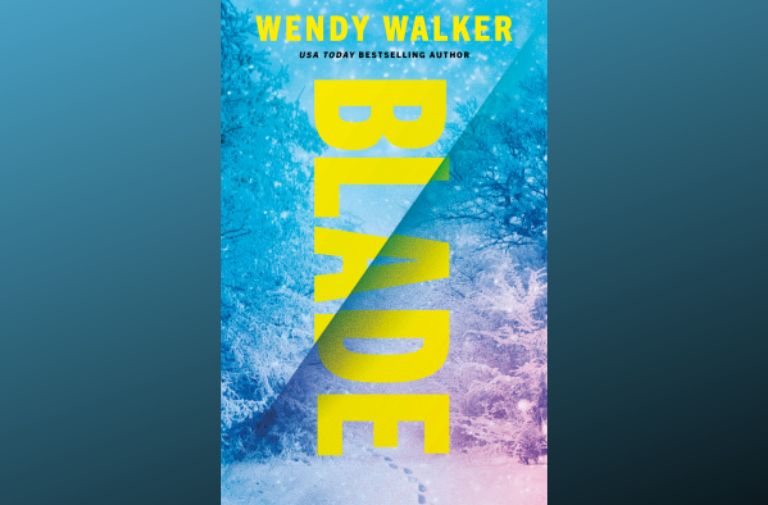
The inspiration behind "Blade" was the author's experience training for competitive figure skating. Read more below.
What was your inspiration behind "Blade?"
"Blade" was inspired by my experience training for competitive figure skating and the way those years shaped nearly every aspect of my life. I spent much of my childhood pursuing the dream of becoming an Olympic skater, including several formative years training away from home in an isolated, highly competitive environment. For a long time, I never considered writing about that world. It wasn’t until my agent encouraged me to explore it that I realized how much emotional and psychological material was there. Once I began plotting, I used my own experiences with ambition, isolation, resilience, and childhood vulnerability to build a fictional story - one that examines the darker underbelly of elite sports, while also honoring the lasting impact those years had on who I became.
What does Reading Rainbow mean to you?
Reading Rainbow, to me, means recognizing yourself in a story in a way that makes you feel seen and understood. When I wrote Blade, it was important that adults who grew up in unusual or difficult circumstances – not just because they trained intensely for a sport or other pursuit, but because of any number of family and societal dynamics - could see themselves reflected in the themes that I explore in the novel. Too often, characters are given a traumatic past as an aside, without a clear explanation of how that experience shaped their adult lives. In "Blade," Ana Robbins is in a unique position to explore the cause-and-effect relationship between childhood trauma and adult life. Keeping that theme clear mattered deeply to me, so that readers who carry those experiences with them could find representation, understanding, and perhaps a sense of validation within the story.
Why do you feel representation of a variety of people is so important when it comes to writing books?
People read for many reasons - to escape, to learn, or to enjoy a great story - and we don’t always choose books because we consciously identify with the characters. But subconsciously, we absorb messages about who is seen and valued from the characters included in the fiction. We notice who holds power, whose inner lives are explored, and what kinds of people matter to those around them. Those signals shape how we see ourselves and how we imagine others see us. That’s why representation is so important. If we never see ourselves reflected in stories, it can subconsciously reinforce a sense of invisibility. Also, a variety of representation - even through characters who are flawed, troubled, or vulnerable - is crucial to avoid stereotyping and to reflect the reality that every person is a unique combination of physical traits, childhood experiences, thoughts and feelings.
Tell us a little more about Blade and why you decided to write it.
"Blade" is a psychological thriller about a young elite skater accused of murdering her coach, and the lawyer who returns to her own past to defend her. The story takes place over a few short days during a snowstorm in Colorado, as the lawyer, Ana Robbins, tries to learn the truth about the murder. In doing so, she faces dark secrets from her own past, training at the same when she was a young teenager. While the story is dark, it’s also deeply emotional, with themes of resilience and identity carrying through to the end. I decided to write "Blade" after my agent suggested revisiting my skating years - something I had never considered, both because they were painful and because I wasn’t sure how to shape them into fiction. I began by excavating my own memories, and from there built a fictional story that carried the same emotional truths. What surprised me most was that in order to write the novel, I had to rediscover the joy I once felt as a skater - a piece of my past that I had long forgotten.
What can fans expect from Blade?
Readers can expect a fast-paced psychological thriller centered on a murder, and set in the cut-throat world of competitive figure skating. Blade offers a deep immersion into an environment most people recognize from the outside but rarely see beneath the surface. At its core, the novel explores how the past shapes the future - especially when that past includes childhood trauma - and how unresolved experiences can resurface in powerful ways. The story is driven by characters you’ll root for until the very end, with twists and turns you won’t see coming. Like all of my work, Blade is designed to be highly entertaining, balancing suspense with rich character development and a vivid, unfamiliar world. Hopefully, Blade is a novel readers won’t be able to out down!
What's up next for you in the bookish world?
I’m working on a new novel that takes readers into the world of wealthy suburbia in a way they haven’t seen before. It centers on two young lovers – a girl from an elite suburban enclave and a boy from “the other side of the tracks.” While their tumultuous relationship ends in tragedy after a local woman is murdered, the lovers are brought back together ten years later when new evidence comes to light. It’s a deeply emotional, twisty story with a love triangle and the layered timelines I often use to build suspense and resonance. I’m also developing a new Audible Original - very “spicy” and written specifically for audio - as a follow-up to "The Room Next Door." I can’t wait!