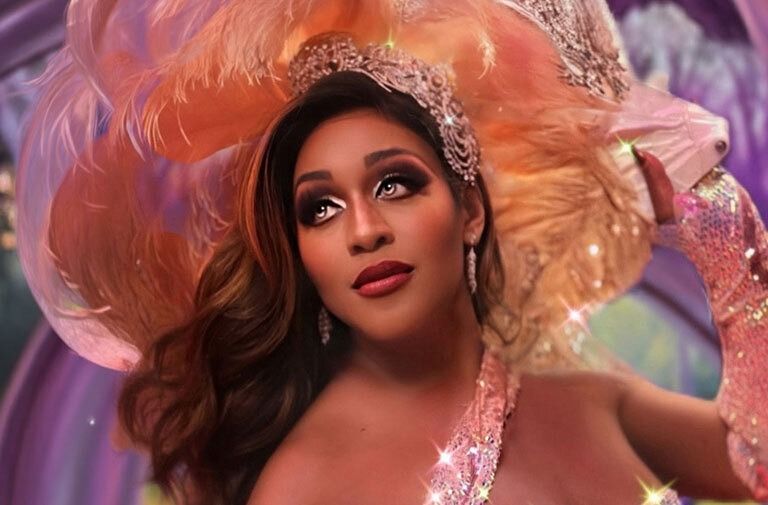
Velvet Lenore likes to say a few words at the end of a performance. One audience member’s response has stayed with her ever since.
After a show, a man approached her and said her speech had changed his mind about taking his own life, she recalled in written responses to OutFAU. They are still friends today.
The encounter helps explain why Lenore cares about what an audience takes home after the music stops. She wants people to leave feeling that they can keep going and be themselves.
Lenore began doing drag in 1997, learning from her drag mother, Melissa St. John. She also credits performers Erica Norell, Tiffany Arieagus and Nikki Adams among her influences, describing the artists who came before her as essential to the performer she became.
Her name carries another personal connection. Lenore was the name of her first serious boyfriend’s grandmother, who loved her, she said.
Onstage, she describes herself as energetic and comedic. Dancers help her turn performances into something resembling the music videos that inspire them.
“They help me bring music videos to life, and that’s what I’m known for,” she said.
Her connection to FAU runs through her chosen family. People she considers family attended the university and call her “mother.” Performing there gave them a chance to see her onstage while she watched them grow into adulthood.
For Lenore, a college audience offers an opportunity to encourage young people who may be struggling to find their footing. She hopes a performance can help even one student feel able to keep pursuing what they believe in.
That sense of purpose also shapes what she wishes people understood about drag. She points to its charity work and the comfort audiences find in shows, describing performances as a source of emotional support.
But she says Florida’s political climate has made her own sense of security harder to maintain. Asked about Gov. Ron DeSantis’s efforts to restrict drag, Lenore described feeling less protected and more watchful about her safety. She also expressed sadness about losing opportunities to reach younger audiences, whom she sees as especially receptive to messages about courage and self-expression.
At 54, she said, she still feels she is fighting to be herself.
Her advice to students considering drag reflects that experience. Starting takes nerve, but she wants them to give themselves permission to try.
“Put your big girl panties on,” she said.
The point is to get out there, experience life and enjoy the chance to perform. Her encouragement arrives with the same insistence she brings to her message from the stage:
“Be free, be free, you only get to live once.”