

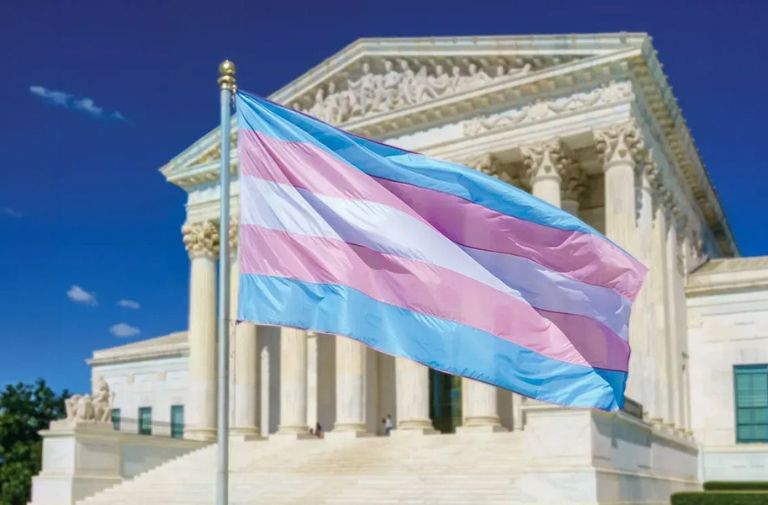
The fight is far from over.
That's the message from LGBTQ advocacy organizations across the country after the U.S. Supreme Court ruled in June that states may prohibit transgender students from participating on school sports teams that align with their gender identity.
"Every child deserves the chance to learn, grow, and participate alongside their peers without being singled out by politicians or pushed out of school activities because of who they are," said Equality Florida, the state's largest LGBTQ advocacy organization in a statement.
The organization added that while the ruling reinforces Florida's existing law, it does not expand it or immediately change the legal landscape for transgender Floridians.
Equality Florida noted that trans Floridians "belong in our schools, on our teams, and in every part of public life.”
The 6-3 decision arose from challenges to laws in West Virginia and Idaho that bar trans girls and women from participating on female school sports teams.
All nine justices agreed the laws do not violate Title IX, though the three liberal justices disagreed with parts of the majority's reasoning. Writing for the majority, Justice Brett Kavanaugh said Title IX allows schools to maintain separate athletic teams based on biological sex.
The Court split 6-3 on the Constitution's Equal Protection Clause. Justice Kavanaugh, writing for the majority, concluded the state laws also satisfy constitutional equal protection requirements. In a dissent, Justice Sonia Sotomayor, joined by Justices Elena Kagan and Ketanji Brown Jackson, argued the majority departed from established equal protection principles by allowing states to categorically exclude trans girls from girls' sports. She also questioned whether the record supported blanket bans, writing that it did not show trans girls inherently possess an athletic advantage in every case.
The ruling allows states to adopt such laws but does not require them to do so, leaving sports policies in states without bans largely unchanged.
Some advocates fear, though, the decision could set up a future legal battle pushing for an interpretation of Title IX that would require schools nationwide to bar trans girls from girls' sports.
For Florida, the decision leaves in place a sports ban that has been on the books since 2021.
National LGBTQ organizations also condemned the ruling, though each emphasized different concerns about its broader impact.
The Human Rights Campaign called the decision "heartbreaking" for trans student-athletes.
President Kelley Robinson said, "No kid — not my kid, not your kid, not any kid — deserves to be discriminated against," warning that the ruling could encourage harassment and invasive questioning of girls who do not fit traditional gender expectations.
The National Center for LGBTQ Rights described the ruling as "a setback, not the final word." Legal Director Shannon Minter noted that many states and school districts can still adopt policies balancing fairness and inclusion without imposing blanket bans.
GLAAD focused on the practical consequences of enforcement, saying the decision could lead to increased scrutiny of girls' bodies while affecting only a small number of trans athletes.
President Sarah Kate Ellis said the ruling "creates an unnecessarily unfair playing field" by restricting opportunities for trans students to participate alongside their peers.
The National Black Justice Collective said Black trans youth could face disproportionate harm. CEO Dr. David J. Johns called the decision "another painful reminder that transgender young people continue to be used as political pawns in a manufactured culture war."
Education advocacy group Glisten argued that school athletics are about more than competition. CEO Melanie Willingham-Jaggers said sports help young people build community and belonging, warning that excluding students sends a message about "who should be valued and included in our schools."
Point of Pride board member and trans athlete Chris Mosier, whose nonprofit helps trans people access gender-affirming care, also encouraged young athletes not to lose hope.
"To every trans athlete out there: you have a community standing behind you. No politician or law can take away your joy or power,” Mosier said. “Young people, regardless of whether they're cis or trans, deserve the joy of sports: to build friendships, to move their bodies and have fun on the field.”
The Center for Constitutional Rights argued the ruling reflects a broader erosion of legal protections for transgender and intersex people. The organization also criticized what it called a lack of support from some Democratic leaders, accusing them of sacrificing transgender and intersex people "on the altar of political expediency."
“Awed and inspired by the courage of trans and intersex people in the face of this mounting threat, we are proud to stand with them, and we are eager to join others ready to bring unwavering fierceness and love to this urgent civil rights struggle,” the Center wrote in a statement.
Although the organizations emphasized different concerns — from legal strategy and education to civil rights and youth mental health — they shared a common message: the Supreme Court's decision is a significant setback, but not the end of the fight over transgender inclusion in school sports.
Equality Florida closed its statement with a message of resilience.
"History has shown that attempts to legislate people out of existence ultimately fail," the organization said. "The freedom to be yourself, to belong, and to live openly is bigger than any one court decision."