

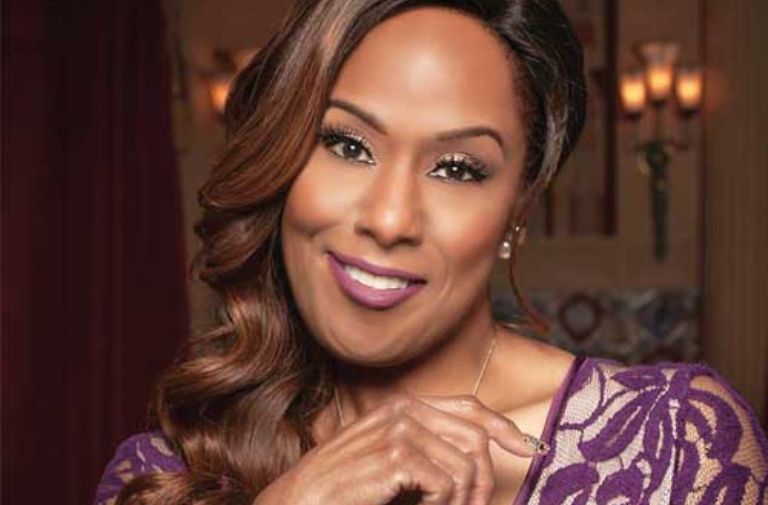
There are performances that entertain audiences for a moment. And then there are performances that alter culture forever.
Jennifer Holliday’s “And I Am Telling You I’m Not Going” from Dreamgirls did exactly that.
More than 40 years after first erupting from a Broadway stage, the performance continues to transcend theater itself — living instead as a cultural anthem rooted in pain, survival, visibility, resilience, longing, and liberation. It has become more than one of Broadway’s greatest musical moments. It has become an emotional scripture for generations of people navigating rejection, identity, heartbreak, isolation, and perseverance.
And now, as legendary Tony Award-winning icon Jennifer Holliday prepares to be honored at Black II Broadway in Wilton Manors on June 6, the significance of her voice and legacy feels especially timely.
Because in today’s social and political climate, “And I Am Telling You I'm Not Going” still sounds like resistance.
The Voice That Changed Broadway
When Jennifer Holliday first arrived on Broadway, she did not come from elite theater schools or generations of entertainment industry preparation. She came from Houston, Texas. From church choirs. From gospel music. From Black Southern spirituality and emotional truth.
“I didn’t know what Broadway was,” Holliday reflected candidly while discussing her early career.
Yet by the time Dreamgirls opened in 1981, Holliday’s portrayal of Effie White immediately shattered expectations of what Broadway performance could feel like emotionally. Her now-iconic rendition of “And I Am Telling You I’m Not Going” was not polished restraint; it was raw devastation. Vulnerability. Rage. Grief. Desperation. Defiance.
Audiences did not simply watch the performance. They felt it. And that emotional honesty is precisely why the performance never disappeared.
Why the Song Became Cultural Language
What makes “And I Am Telling You I’m Not Going” extraordinary is not just Jennifer Holliday’s vocal ability. It is the emotional universality embedded within it.
The song speaks to abandonment. To invisibility. To fight not to be discarded. To demanding humanity in spaces that attempt to erase people.
For Black audiences, the song became layered with generations of emotional survival and perseverance. For women, it reflected heartbreak, worthiness, and emotional power. But within LGBTQ+ communities — particularly Black queer communities, the song evolved into something even deeper. It became an identity. It became survival. It became a declaration.
Holliday herself acknowledges the profound relationship between her career, Dreamgirls, and the LGBTQ community.
“I really don’t think that my career, nor the success of Dreamgirls, could have even been to the level that it did get had it not been because of the LGBTQ+ community,” she shared.
During the height of the AIDS epidemic and in an era when many queer people were forced to live hidden lives under enormous societal pressure, Effie White’s emotional isolation resonated deeply. Her awkwardness. Her rejection. Her need to be seen and heard. It reflected experiences many queer people intimately understood.
And while mainstream culture was still deciding how to receive Jennifer Holliday, queer audiences had already embraced her fully.
Drag performers kept the music alive in clubs and performances around the world. LGBTQ nightlife spaces carried Dreamgirls into future generations. Queer audiences protected the emotional legacy of the work long before Hollywood revisited it decades later.
“Those drag queens kept Dreamgirls going,” Holliday said affectionately.
The song survived because marginalized communities protected it. And in many ways, the song protected them right back.
Why It Still Resonates Today
The reason “And I Am Telling You I’m Not Going” still resonates so profoundly in 2026 is because the emotions underneath it remain painfully familiar.
The desire to be seen.
The fear of abandonment.
The refusal to disappear or be erased.
The insistence on dignity.
The cry for humanity.
Across America, Black and LGBTQ communities continue navigating cultural attacks, political division, censorship, and ongoing battles around representation, identity, bodily autonomy, and inclusion. In that climate, Holliday’s performance continues to feel startlingly current.
The song no longer belongs to one storyline. It belongs to anyone who has ever had to fight not to disappear.
And perhaps most powerfully, Jennifer Holliday’s own life mirrors the resilience embedded in the music. Behind the Broadway legend exists a woman who survived depression, financial hardship, career rejection, body image struggles, multiple sclerosis, and years of deeply personal battles.
Yet she remains standing. Still singing. Still showing up.
At one point in reflecting on the song today, Holliday explained that it has evolved far beyond a love song for her personally.
“It’s me telling the world, ‘And I’m telling you, I’m not going,’” she said.
And perhaps that is why audiences continue responding so emotionally to her voice after all these years. Because Jennifer Holliday is no longer merely performing survival.
She embodies it.
Black II Broadway & the Preservation of Black Artistic Legacy
That is precisely why events like Black II Broadway matter so deeply right now.
The production is more than a musical showcase. It is an intentional celebration of Black artistry, Black storytelling, Black visibility, and the profound cultural contributions Black performers have made to Broadway and American entertainment.
As Black II Broadway arrives in Wilton Manors — a city nationally recognized for LGBTQ+ visibility and community, it creates a powerful intersection between Black cultural excellence and queer representation.
Jennifer Holliday’s presence elevates that mission enormously.
“To have your own people say, ‘We’re proud of you. We love you. We support you,’ means a lot,” Holliday shared about being honored by Black II Broadway.
For Wilton Manors, the event represents more than entertainment programming. It represents cultural affirmation. It expands conversations around who gets centered within LGBTQ+ spaces and whose artistry deserves preservation and celebration.
Black II Broadway reminds audiences that Black performers did not merely participate in Broadway history.
They transformed it.
For tickets or more information, please visit: https://www.showpass.com/blackbroadway/
More Than a Voice
Jennifer Holliday once said she hopes people remember that she was “more than a song, more than a voice.” But perhaps what makes her legacy so enduring is that her voice became something larger than performance entirely.
It became a refuge. It became an emotional release. It became an affirmation for communities that often felt invisible.
And over four decades later, every time Jennifer Holliday sings “And I Am Telling You I’m Not Going,” the performance still carries the same message it always has:
I deserve to be here.
I deserve to be heard.
I deserve to survive.
And in a world where so many people are still fighting for exactly those things, Jennifer Holliday’s voice continues to matter as much now as it ever did.
Black II Broadway comes to Wilton Manors’ Gray Box Theater June 6 with a VIP reception at 5:30 p.m., a 7 p.m. show, and a special performance by Jennifer Holliday.