

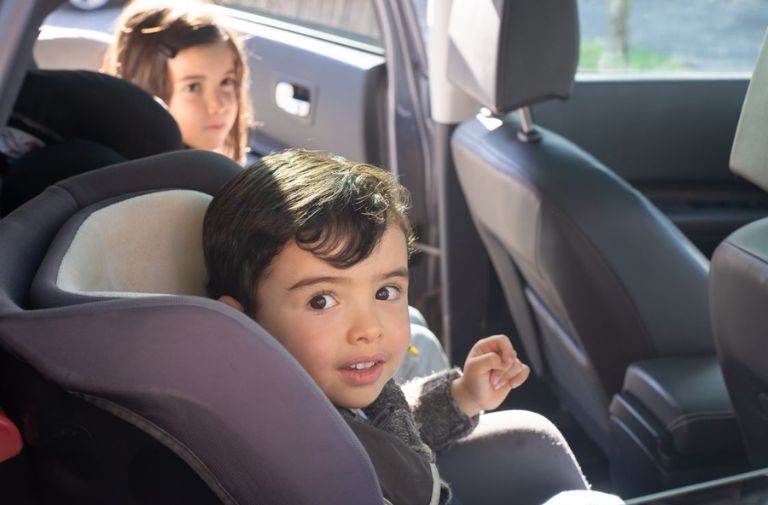
For kids in Florida, the law requires car seats and booster seats to be properly used, and most manufacturers explicitly advise against using those products in the front seat except when a rear seat isn't available, like in a pickup truck with no back row.
The state's child passenger safety laws do lay out clear requirements for how children must be restrained in a vehicle, and safety guidelines from both car manufacturers and pediatric health organizations strongly recommend keeping kids in the back seat until they're at least 13.
What Does Florida Law Say About Child Passengers?
Here’s what Florida law has to say about child passengers:
Children Aged 0 to 3
Kids in this age grade must be in a child restraint device, either a separate car seat or a vehicle manufacturer's integrated child seat.
Rear-facing seats are the safest option for this age group. A child should stay rear-facing as long as the seat allows, usually until age two or three.
Children Aged 4 and 5
These kids must be in a separate carrier, integrated child seat, or booster seat. A booster seat lifts the child so the vehicle's seat belt sits across the chest and upper thighs rather than the stomach and neck, which is what makes it safer for this age.
Children Aged 6 Through 17
Once a child turns six, Florida's car seat law no longer applies. From that point, Florida’s seat belt law takes over.
All children under 18 must wear a seat belt at all times while in a moving vehicle. This applies whether they're in the front or the back. For a seat belt to fit correctly, the lap portion should lie across the upper thighs, not the stomach, and the shoulder belt should cross the chest and shoulder without touching the neck.
Failing to comply with Florida's child restraint requirements is a moving violation. Parents can face a fine and points on their license.
Why the Back Seat Is Safer for Florida Kids
The back seat is where vehicles are actually designed to protect children. Rear seats include LATCH anchor points for car seats that the front seats don't have. Back seats also put more distance between a child and the point of impact in most crashes, particularly head-on collisions.
Most car manufacturers and the American Academy of Pediatrics both recommend waiting until a child is at least 13 and at least 4'9" tall before allowing them in the front seat.
Below that height, the seat belt doesn't fit correctly. The shoulder belt can cross the neck instead of the chest, and the lap belt can sit across the stomach instead of the thighs. That's a serious injury risk in a crash.
Front airbags are the other major concern. They deploy at extremely high speeds and are built for adult bodies. For a small child in the front seat, airbag deployment can cause head injuries, neck trauma, and chest injuries. The force alone has been fatal to young children.
Key Takeaways
- Florida law requires children five and under to be in a federally approved child restraint device at all times in a vehicle.
- Children ages 0 to 3 must be in a rear-facing seat or integrated child seat. Children 4 and 5 must be in a carrier, integrated seat, or booster.
- From age six onward, Florida's seat belt law says all passengers under 18 must wear a seat belt regardless of where they sit.
- Florida has no law setting a minimum age for front seat riding, but safety guidelines recommend waiting until at least age 13 and 4'9" tall.
- Front airbags are designed for adults and can seriously injure or kill small children upon deployment.
- Legal compliance and actual safety are not always the same thing. When in doubt, keep kids in the back.
The views, opinions, and recommendations expressed in this article are solely those of the author and are provided for informational and editorial purposes only. They do not constitute professional advice and should not be relied upon as such. OutSFL makes no representations or warranties regarding the accuracy, completeness, or applicability of the content and assumes no liability for any actions taken based on it. The views expressed do not necessarily reflect those of OutSFL.