

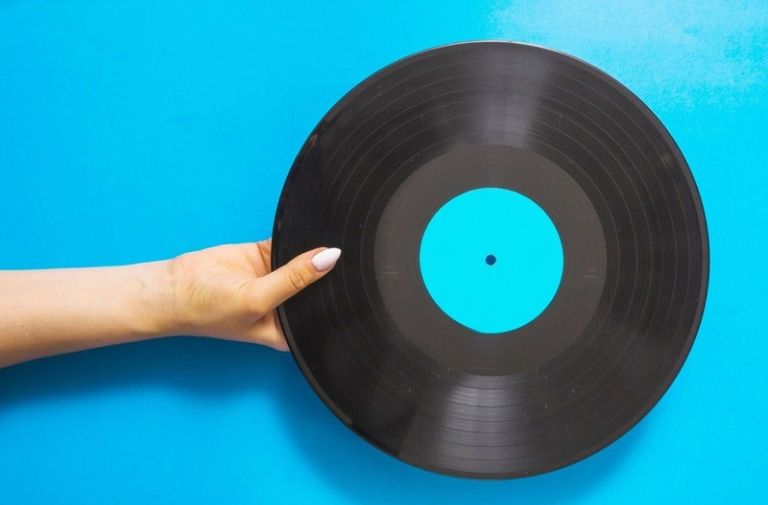
Most people now meet a new album, a new novel, or a new product on a screen. A thumbnail, a feed, an autoplay. And yet the physical version of that same release still moves serious money: US vinyl shipments hit 43.6 million units in 2024, worth an estimated $1.44 billion at retail, according to figures reported by Digital Music News. People are still paying for an object they have to open.
The Reveal Became the Event
Somewhere along the way, opening the thing turned into the thing. Unboxing videos, where someone films themselves pulling a purchase out of its wrapper, grew from a curiosity into a recognizable online genre that now takes in collectibles, apparel, and limited-edition drops alongside gadgets. That is a genre built entirely on sequence and material. No one watches for the product specs. They watch for the lift of the lid.
Our editors read that as a shift in where the design work sits. A record sleeve and a book jacket are the home-grown versions of the same instinct, made in-house by the label or the publisher. But a launch kit is its own form now, sitting right beside them. Agencies commissioned for creative packaging for product launches are shaping the same first impression a sleeve designer shapes: what comes out first, what it feels like, what the recipient sees before anything else.
Vinyl's Numbers Argue Against Nostalgia
The easy story about vinyl is that it's sentiment, a format propped up by people who like the ritual. The revenue line does not read that way. US vinyl shipments were up 1% in 2024 over the previous year, per Digital Music News, reaching that 43.6 million units and $1.44 billion in retail value.
Look back a little further and the growth is harder to dismiss. Figures compiled by Dynamoi put US vinyl revenue at roughly $619.6 million in 2020 and about $1.4 billion by 2024, more than double in four years. That is not a flat line with a loyal fringe attached. That is a category expanding while the cheapest, fastest way to hear any of this music sits in everyone's pocket.
Which raises the question the sales charts can't quite answer on their own. If the audio is the point, the physical object is redundant. So the thing being bought is partly the object: the sleeve, the weight, the gatefold, the act of putting it on. Presentation isn't decoration layered over the content. For a meaningful number of buyers, it's a reason to buy at all.
One Release Can Move an Entire Format
Zoom in from the format to a single title and the scale gets stranger. The US recorded music industry reached $8.65 billion in the first half of 2024, its highest first-half total on record, with vinyl accounting for 24.3 million units worth $739.9 million in that stretch, a 17% rise in value, as RouteNote reported from RIAA data.
The bigger marker came next. US vinyl sales revenue passed $1 billion for the first time since 1983, and Taylor Swift's The Life of a Showgirl accounted for 1.6 million vinyl units on its own, more than any other release that year, per Rolling Stone's reporting on the RIAA figures. One album. One physical edition. A number large enough to register in a national total.
Meanwhile the format next door went the other direction: CD sales fell 11.6% and revenue 7.8% over the same period. That contrast is the useful part. If physical media were simply fading on a schedule, both would be sliding together. Instead the format with the large, designed, display-ready package is the one growing, and the format that mostly comes in a thin plastic case is the one shrinking. Buyers are not choosing physical. They're choosing a particular kind of physical.
Packaging Has Its Own Award and Its Own Collectors
There's a tell in how the industry organizes its own praise. The Grammy Awards include a category recognizing the visual packaging and art direction of an album release, judged separately from the categories that assess the music. The people closest to the work decided the wrapper was its own discipline, worth evaluating on terms the songs have nothing to do with.
Collectors reached the same conclusion from the other end. Vinyl sleeves and book jackets have long doubled as display pieces, and the condition and design of that packaging weigh into how collectors judge an edition. That judgment happens in secondhand shops and online listings, every day, with no committee involved.
Put those two habits together and the digital-first framing starts to look backward. The reveal isn't a wrapper around the real product, waiting to be thrown out once the content is accessible. It's a designed decision about what a reader or listener encounters first, made by someone, on purpose, and remembered long after.
The views, opinions, and recommendations expressed in this article are solely those of the author and are provided for informational and editorial purposes only. They do not constitute professional advice and should not be relied upon as such. OutSFL makes no representations or warranties regarding the accuracy, completeness, or applicability of the content and assumes no liability for any actions taken based on it. The views expressed do not necessarily reflect those of OutSFL.