
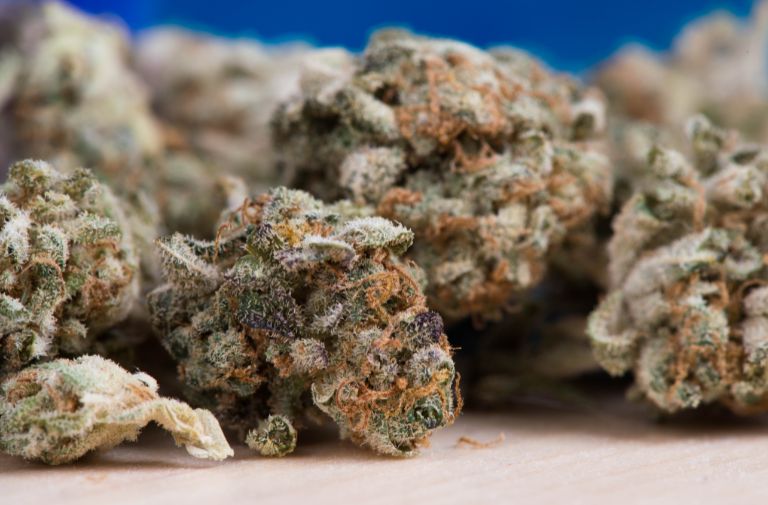
Does THCA get you high? In its raw, unheated form, the answer is no, because THCA is the non-intoxicating acid that cannabis produces before any real THC exists. Only heat unlocks the high, which is why the same flower can behave so differently.
Smoke it, vape it, or bake it, and THCA converts into Delta-9 THC, the compound behind the classic cannabis high. In the jar, it stays inert, but heat turns it strongly psychoactive.
The raw-versus-heated difference also drives what happens in drug tests and how 2026 legality is shifting fast.
Does THCA Get You High?
The honest answer depends entirely on heat, so THCA can get you high or leave you stone-cold sober from the very same bud. Eaten raw, it will not get you high; chewing raw flower, juicing fresh leaves, or taking an unheated tincture produces zero intoxication.
Apply heat, though, and the very same THCA converts into Delta-9 THC, which is fully psychoactive. A bag of high-THCA flower is non-intoxicating sitting in the jar and intoxicating the moment you light or vape it.
So the "no high" claim on many labels is true, but only for the raw material. It is not true for how most people actually use these products. Once heat is involved, high-THCA flower behaves like regular marijuana, buzz and all.
What Is THCA?
Tetrahydrocannabinolic acid, or THCA, is the raw, acidic cannabinoid that fresh and living cannabis produces in abundance. It is the direct chemical parent of THC. In a growing or freshly harvested plant, very little activated THC is present yet.
Nearly all of that potency is still locked up as THCA. With drying, curing, and heat, the THCA slowly converts into THC over time. A raw cannabis bud and a lit one behave so differently for exactly this reason.
THCA is also one of the most abundant cannabinoids in many hemp and cannabis strains. High-THCA flower has flooded shelves precisely because growers can pack buds with the acid while keeping activated THC low on paper. Grasping that starting point makes the rest of the raw-versus-heated question easy to follow.
Why Raw THCA Doesn't Get You High
Raw THCA doesn't get you high because of one small piece of its structure. It comes down to how the molecule fits your receptors. THCA and THC are nearly identical, separated only by an extra carboxylic acid group, which changes the molecule's shape.
The altered shape no longer fits neatly into the CB1 receptors in your brain. CB1 activation is what produces the high, so without a good fit, there is no intoxication. Eating raw flower, drinking fresh cannabis juice, or using an unheated tincture simply delivers THCA, not THC.
Your body will not do the conversion for you, either. Raw THCA does not turn into THC once it is inside you; it needs external heat from a flame, vaporizer, or oven to activate first.
Early research shows raw THCA instead acts on other targets, behaving as a PPARgamma activator rather than a CB1 intoxicant. The distinction is why raw cannabis can be used for everyday wellness without any buzz at all.
How THCA Becomes THC: Decarboxylation
THCA becomes THC through a heat-driven reaction called decarboxylation. This single step flips the answer from "no high" to "full high." In plain terms, decarboxylation knocks the extra carboxylic acid group off the molecule, and what remains is Delta-9 THC.
The freed THC then slots into your CB1 receptors and produces the high. Heat is the trigger for the whole process. THCA is progressively decarboxylated to THC with drying, and especially under intense heating such as smoking.
The hotter and faster the heat, the quicker the conversion. Smoking and vaping decarb THCA almost instantly, while baking works more slowly at oven temperatures, often around 200 to 245 degrees Fahrenheit. Very low heat converts little, which is why gentle drying alone leaves most of the THCA intact.
One more detail matters. When cannabis is heated or burned, decarboxylation is rapid but not total, so a little THCA always survives. Lab certificates report THCA, THC, and a separate "total THC" number for this reason, estimating how much THC you will actually get after heating.
Does THCA Get You High When You Smoke It?
Smoking THCA gets you high almost instantly, because a flame delivers far more heat than decarboxylation needs. The flame from a joint, pipe, or bong burns far hotter than THCA needs to convert, well past that point in real time.
The conversion happens in the instant you inhale, so smoking high-THCA flower feels essentially like smoking regular marijuana. The effects arrive fast because inhaled THC reaches your bloodstream through the lungs within minutes.
Potency tracks the flower's THCA percentage closely. A strain testing in the high twenties can deliver a strong, familiar high once lit, while a weaker one feels milder. If a product is sold as smokable "THCA flower," treat it as fully intoxicating, because heating is exactly how it is meant to be used.
Does THCA Get You High When Vaporized?
Vaporizing THCA gets you high too, for the same reason smoking does, since a vaporizer sits right in the decarboxylation range. A dry-herb vaporizer or dab rig heats the material enough to convert THCA into active THC before you inhale the vapor.
The high can feel a little cleaner than smoke, but it is the same Delta-9 THC doing the work. Onset is fast, usually within a few minutes, since vapor still delivers THC straight through the lungs.
Temperature settings make a real difference here. Higher vape temperatures convert more THCA and hit harder, while very low settings convert less and feel gentler. Either way, vaping is heating, so start conservatively if you are unsure of a strain's strength.
Does THCA Get You High When Eaten?
Eating THCA is the nuanced case, and the answer hinges entirely on whether the THCA was heated before it reached your plate. Eating truly raw THCA, such as raw flower, a fresh cannabis smoothie, or an unheated tincture, will not get you high, because nothing has triggered the conversion.
There is no heat to activate it, and your body will not do the job for you. Cooked edibles are a completely different story. Many gummies, brownies, and infused oils are made with cannabis that was decarbed during processing, so they contain active THC and absolutely can get you high.
If you bake raw flower into butter, the oven heat itself decarboxylates the THCA along the way. Raw-cannabis products, like cold-pressed juices and raw tinctures, stay non-intoxicating for the opposite reason.
Read how any edible was made before you eat it. Raw and unheated means no high, while cooked or decarbed means a real one. Edible highs also come on slower, often 30 to 90 minutes, and tend to last longer than inhaling.
Do You Get Stoned or a Buzz from THCA?
Once THCA is heated into THC you can get the full range, from a light buzz to a heavy stone. How far you go comes down to dose and strain. Raw THCA, by contrast, produces neither; there is no buzz and no stone without heat to activate it first.
The intensity is dose-dependent, not different in kind from regular THC. A couple of puffs of high-THCA flower might leave you pleasantly buzzed, while a heavy session or a strong edible can put you firmly couch-locked.
The "THCA" label does not soften the experience once heat enters the picture. What controls how stoned you feel is the amount of activated THC, your tolerance, and the strain, exactly as with any cannabis product.
How Strong Is a THCA High and How Long Does It Last?
A THCA high is exactly as strong as any other THC high at the same dose, because the molecule is identical once decarboxylation is done. Strength depends on the flower's potency, how much you take, and your tolerance, not on the fact that it began life as THCA. In other words, the acid origin is irrelevant to intensity once heat has done its job.
Timing depends on the method you choose. Inhaled highs, from smoking or vaping, begin within about 10 minutes and generally taper over two to four hours. Edible highs take longer to arrive, often 30 to 90 minutes, but can last several hours longer because of how the liver processes THC.
Because decarboxylation is rapid but not complete, a little THCA usually stays unconverted, yet there is still plenty of THC to feel. If you are new to it, start with a low dose and wait before taking more. You can always add to a mild experience, but you cannot undo one that is too strong.
THCA vs. THC: The Key Difference
THCA and THC are the same core molecule caught at two different life stages, which is the key difference behind every point above. THCA is the raw, inactive acid the plant makes, and THC is the active, intoxicating form it becomes after heat strips the acid group away.
This single difference is why high-THCA hemp can be sold as legal flower while behaving like marijuana once lit. Here is the quick comparison:
|
Feature |
THCA (raw) |
THC (heated) |
|
Intoxicating? |
No |
Yes |
|
Binds CB1 receptors |
Poorly |
Strongly |
|
Needs heat to activate |
Yes |
Already active |
|
Found in |
Fresh, raw cannabis |
Smoked, vaped, cooked cannabis |
|
Shows on a drug test |
Not directly |
Yes, as THC-COOH |
Notice why lab reports separate THCA, THC, and total THC. The total-THC figure estimates how much THC the product yields after decarboxylation. Total THC is the number that decides both your high and the product's legal status, so it deserves a close look before you buy.
Does THCA Show Up on a Drug Test?
THCA does not show up on a drug test directly, but it can absolutely make you fail one, so the practical answer is yes for anyone who heats it. Standard urine tests do not look for THCA itself; they look for THC-COOH, the metabolite your body makes after you consume active THC.
Raw, unheated THCA that never converts is unlikely to produce that metabolite. The catch is that almost nobody uses THCA raw. Smoke, vape, or eat a heated THCA product and it becomes THC, which your liver breaks down into THC-COOH.
THC-COOH is exactly what the test detects. Following use, urine can carry detectable levels for days, and considerably longer in frequent users.
So if you are subject to drug testing, treat heated THCA products the same as marijuana. The words "hemp-derived" and "legal" on a label do not change what a lab finds in your sample.
Is THCA Safe? Side Effects and Risks
For most healthy adults, raw THCA is considered low-risk and non-intoxicating, while heated THCA carries the same general safety profile as regular THC. It is not risk-free, though, and a few specific groups should be genuinely cautious before using it.
Because heated THCA is fully psychoactive, its side effects mostly mirror those of THC. The practical safety questions are really THC safety questions once any heat is applied.
Common Side Effects
Once THCA is heated and acts as THC, the usual THC side effects can appear. These are typically mild and temporary:
- Dry mouth and dry, red eyes
- Increased heart rate
- Anxiety or paranoia, especially at high doses
- Impaired coordination, memory, and reaction time
- Dizziness or drowsiness
Raw THCA is far less likely to cause these, since it is non-intoxicating. Even so, large amounts of any cannabis product can still upset your stomach.
Who Should Be Cautious
Some people should be careful with heated THCA or avoid it entirely:
- Anyone facing a drug test for work, sport, or legal reasons
- People who are pregnant or breastfeeding
- Those with heart conditions or a history of anxiety or psychosis
- Anyone about to drive or operate heavy machinery
- Minors; these products are strictly for legal-age adults only
When in doubt, talk with a healthcare professional, particularly if you take other medications. A quick conversation is worth it before mixing cannabinoids with anything else.
What Does THCA Do? Potential (Non-Intoxicating) Benefits
Beyond serving as the raw precursor to THC, THCA is drawing genuine scientific interest for effects that have nothing to do with getting high. It is important to be clear up front that this research is still early, mostly preclinical, and not a promise of any specific result. Treat what follows as promising early signals, nothing more.
In laboratory studies, THCA behaves as a potent PPARgamma activator with anti-inflammatory and neuroprotective activity. Researchers have explored it in models of inflammation, and early work points to possible anti-nausea and neuroprotective properties.
This is one reason some people juice raw cannabis or use raw tinctures, chasing these non-intoxicating effects rather than a buzz. None of it is a substitute for medical treatment, and the strongest human evidence is simply not in yet.
Still, THCA is a useful example of a cannabinoid that may be biologically active without being psychoactive, at least until you apply heat. This mix of activity without intoxication keeps researchers and raw-cannabis fans interested.
Does THCP Get You High? (And How It Compares)
THCP gets you high, and potentially far more intensely than THC does, which makes it well worth a quick mention right here. THCP is a separate, naturally occurring cannabinoid that binds CB1 receptors far more strongly than ordinary Delta-9 THC does.
The much stronger binding could make it dramatically more potent gram for gram. Like THCA, its acidic raw form still needs activation through heat to become fully active.
If you see products blending THCP with THCA or Delta-8, expect a strong experience and start with a very small dose. Remember that THCP is not a milder alternative to THC but generally a stronger one, so treat it with extra respect.
Is THCA Legal in 2026?
High-THCA hemp products are currently legal at the federal level under the 2018 Farm Bill, which defines hemp as cannabis with no more than 0.3% delta-9 THC by dry weight. Because that rule measured only delta-9 THC, raw THCA flower slipped through, even though it becomes intoxicating when heated.
That situation is changing quickly. A November 2025 amendment redefines hemp by total THC, including THCA, capped at 0.3% by dry weight. That closes the loophole by counting the THCA that heat would later activate.
Once it takes effect, that standard would reclassify most high-THCA flower as marijuana. State laws also vary widely, and several states already restrict or ban these products outright. Check your state's current rules before buying, because the legal ground here is shifting and may look different by the time you read this.
How to Use THCA (If You Want the High)
If you want the high from THCA, the method is simple: apply heat, and start low with whatever you choose. Smoking or vaping high-THCA flower converts it fastest, while decarbing and cooking it into edibles gives a slower, longer, and often stronger experience.
Whatever route you pick, begin with a small amount and wait. More is easy to add and impossible to take back, especially with edibles that can take up to 90 minutes to land.
Quality and testing matter more here than almost anywhere else. Because potency and legality both hinge on the total-THC math, buy only lab-tested THCA with published, batch-specific results. As one example, Exhale Wellness publishes batch-specific COAs on its indoor-grown THCA flower, with strains in the 22 to 31%+ THCA range and a 90-day guarantee.
A current certificate of analysis tells you the real potency, confirms the product is Farm Bill compliant, and protects you at the register and beyond. Skipping that step is how people end up with weaker flower, or a legal headache.
Frequently Asked Questions
Do you get stoned from THCA?
Only after heat. Raw THCA will not get you stoned, but smoking, vaping, or eating a heated THCA product converts it to THC. From there you can feel anything from a light buzz to a heavy stone, depending on your dose and the strain you choose.
Can raw THCA juice cause a positive drug test?
It is unlikely on its own. Raw, unheated THCA is not converted to THC, so it should not create the THC-COOH metabolite that urine tests look for. If heat touched it during prep, trace THC can form, so avoid it before a test.
How long does a THCA high last?
About the same as any THC high, since the active molecule is identical. Inhaled, it typically peaks in minutes and fades over two to four hours. As an edible, it comes on slower and can last several hours longer before it fully wears off.
Does THCA show up on a drug test?
Heated THCA does. Tests detect THC-COOH, the metabolite formed after you consume active THC, rather than THCA itself. Any smoked, vaped, or cooked THCA product can therefore trigger a positive for days afterward, so avoid it entirely if you are screened.
Is 30% THCA the same as 30% THC?
Not exactly. A 30% THCA flower is not yet active, and decarboxylation is never perfectly complete, so the actual THC you get after heating comes out somewhat below 30%. It is still very potent, but the raw THCA number slightly overstates the punch you will feel.
The Bottom Line
Raw THCA will not get you high, but heated THCA absolutely will, because heat converts it into ordinary Delta-9 THC. Smoke it, vape it, or bake it, and you get a real, full-strength high, plus a positive drug test if you are screened.
Before you buy, check the total-THC number, confirm current legality in your state, and choose flower with a published COA. Know how heat works, and THCA holds no real surprises once you understand it.
Disclaimer: This content is for general informational purposes only and is not medical, legal, or professional advice. These products are for legal-age adults only; heated THCA is intoxicating and may trigger a positive drug test.
These statements have not been evaluated by the FDA. Always confirm your local and state laws before you buy.
The views, opinions, and recommendations expressed in this article are solely those of the author and are provided for informational and editorial purposes only. They do not constitute professional advice and should not be relied upon as such. OutSFL makes no representations or warranties regarding the accuracy, completeness, or applicability of the content and assumes no liability for any actions taken based on it. The views expressed do not necessarily reflect those of OutSFL.