
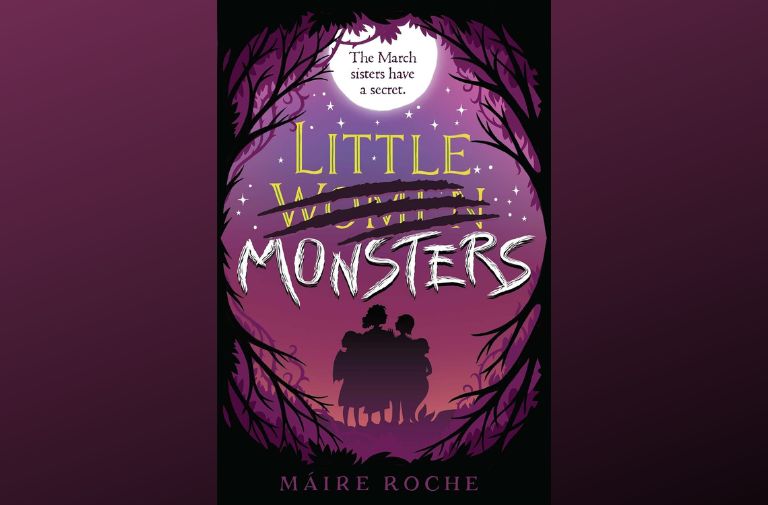
Check out our interview with Máire Roche, the author of "Little Monsters."
What was your inspiration behind Little Monsters?
I love a retelling that changes age categories or genres, and Little Monsters was the perfect mixture of those things for me. I loved Little Women as a kid, and while I know everyone loves Jo (or Amy! Or poor tragic Beth!), I’ve always had a soft spot for Meg. I wanted to explore the pieces of Meg that makes her the Meg March we know—what was it like for her as the eldest daughter, trying to do what she could to secure her family’s future? The version of Meg we meet in Little Monsters is only a young teenager, but I wanted to still explore that pressure she experiences even now as an eldest daughter navigating foster care and some really complex secrets she doesn’t feel like she can’t tell anyone about.
What does Reading Rainbow mean to you?
To me, Reading Rainbow means getting to read stories about genuine queer and trans experiences, by queer and trans people who are able to live their truth. In a time when stories and authors are facing increased pressure, book bans, and hatred just for living and sharing their truth, it’s even more important to listen when queer and trans creators speak.
While Little Monsters is about Meg March, who isn’t explicitly queer on page, there are queer characters throughout, and queerness is a normal part of the world she lives in—just like it’s a normal part of the world we all live in. Some people may not like this reality, or even fight back against those of us living our truth, but queerness is here to stay. And reading with pride has never been more important.
Why do you feel representation of a variety of people is so important when it comes to writing books?
Reading is an exercise in empathy. When we read a character who is not like us, we imagine what it must be like to exist in the world in their shoes. How it would feel, who wen would be, what choices we would make. And more than that, empathy requires practice—and reading is a great way to practice empathy for people from all sorts of backgrounds.
There are some great organizations like We Need Diverse Books, DVPit, and many more who are working to make sure more diverse stories are told. It’s a real problem across publishing, but especially in kidlit. Recent surveys of traditionally published picture books revealed that you’re more likely to encounter a talking animal protagonist than you are an Indigenous or Black main character.
I’m a (former) early childhood educator, and I know the incredible importance of all children seeing themselves reflected in the stories they read, so this kind of data is extra concerning. It’s a problem we all need to tackle, too. If you read regularly, but you don’t read diversely, challenge yourself to pick up a book in your favorite genre by someone whose background you don’t share—an author of color, a queer author, a disabled author, etc.
Read more widely! Practice empathy! You’ll grow a lot, and read great stories, too.
Tell us a little more about Little Monsters and why you decided to write it.
Little Monsters is a magical, monstrous retelling of Little Women—if the March sisters were trying to navigate foster care together while hiding the fact that they transform in increasingly uncontrollable ways. Meg, the oldest, is also dealing with middle school, a bully at school, and a crush on the cute new neighbor boy.
Ultimately, I decided to write this story because I wanted to explore the way growing up, body changes, and undiagnosed anxiety can feel uncontrollable and terrifying—and to tell kids who read it that it’s okay to feel that way, that they’re not alone, and, always, that it gets better.
What can fans expect from your book?
Readers can expect some cozy (but spine-tingling) vibes, autumn in Salem, magic and monstrous found families, and several nods to the original story. While Little Monsters is a middle grade story about Meg’s life in modern Salem, fans of the original will find many favorite characters, including the neighbor boy Brooks (John Brooke).
I hope kids Meg’s age also experience the heart of the story that I tried best to capture: that no matter who you are or how big and scary your emotions feel, you have a very special place in this world, and we’re so glad you’re here.
What's up next for you in the bookish world?
I write across genres and age categories, so I have some upcoming paperback releases of some YA titles and a new romantic fantasy for grown-ups, but for the middle grade audience…well, all I can say is that I’ve got some secrets up my sleeve, and a brand new monstrous magical story that I hope you’ll get to read very soon.