Some movies entertain us for a couple of hours. Others become part of our lives.
For me, Toy Story has always been more than a movie franchise. It has been a companion through childhood, adolescence, and adulthood. Like many people who grew up in the 1990s, I can still remember the excitement surrounding that first film. There was nothing quite like it at the time. The animation felt groundbreaking, but what truly captured my imagination was the simple idea that our toys might have lives of their own when we weren't looking.
Growing up in Puerto Rico, my brother Juan Edgardo and I spent countless afternoons creating entire worlds with our toys. I had my Barbies. He had his Teenage Mutant Ninja Turtles. Somehow those worlds always managed to collide in ways that made perfect sense to us. Barbie might find herself embarking on a mission with Leonardo and Michelangelo, while the turtles occasionally needed help navigating some dramatic storyline we had invented.
Looking back, those afternoons were never really about the toys themselves. They were about imagination, creativity, and the kind of unstructured play that allows children to become storytellers without even realizing it.
That is one of the reasons the Toy Story films have always resonated with me. Beneath the humor and adventure, these movies understand something profound about childhood. Toys are never just toys. They become friends, sidekicks, confidants, and companions through some of life's earliest experiences. They
help children process emotions, navigate friendships, and make sense of a world that often feels much bigger than they are.
As the franchise continued, it seemed to grow alongside its audience. Toy Story 2 explored friendship, loyalty, and self-worth. Toy Story 3 delivered one of the most emotional farewells in animation history as Andy prepared to leave for college. I remember sitting in the theater realizing that I wasn't simply watching a character grow up. In many ways, I was reflecting on my own childhood and how quickly those years had passed. By the time Toy Story 4 arrived, the story had become less about holding on and more about finding new purpose and embracing change.
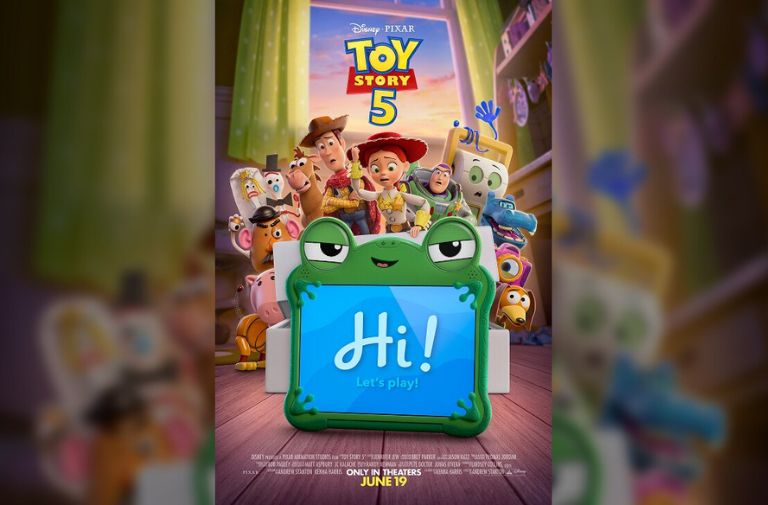
That is why I find myself genuinely excited about Toy Story 5. The newest installment reunites Woody, Buzz, Jessie, and the rest of the gang while introducing a challenge that feels remarkably relevant today. This time, the toys find themselves competing with technology for a child's attention as Bonnie becomes increasingly attached to a tablet called Lilypad. The film explores questions that many families are already asking: What happens when screens begin replacing traditional play? How do children build friendships, creativity, and imagination in an increasingly digital world? And perhaps most importantly, what is lost when we stop making time for simple moments of connection?
What interests me most is that the film does not appear to be a lecture about technology. Instead, it seems to be exploring balance. The heart of the story remains centered on friendship, belonging, and human connection, themes that have defined the franchise since Woody and Buzz first learned to trust one another all those years ago.
Pixar has always been at its best when it uses toys, monsters, fish, or robots to tell stories about very human experiences, and Toy Story 5 appears to continue that tradition.
As an educator, writer, and lifelong lover of storytelling, I often think about the role imagination plays in our lives. Some of my earliest lessons about storytelling happened on the living room floor with my brother, a pile of Barbies, and a group of Ninja Turtles. We weren't trying to create masterpieces. We were simply playing. Yet those moments taught us how to build worlds, solve problems, create characters, and connect with one another through stories.
Long before I was writing articles, teaching communication courses, or reviewing books, I was learning the foundations of storytelling through play. Perhaps that is why Toy Story continues to resonate with so many people nearly three decades after its debut. The franchise reminds us that growing up does not mean leaving wonder behind. It reminds us that friendship matters, imagination matters, and connection matters. In a world that often feels increasingly fast-paced and digital, those messages feel more important than ever.
When Sebastian and I head to the theater with friends to see Toy Story 5, I know I will be excited to spend time again with Woody, Buzz, Jessie, and the rest of the gang.
But I also know I'll be thinking about a little girl in Puerto Rico, sitting on the floor with her brother, creating adventures with Barbies and Ninja Turtles and believing, just for a moment, that toys might come alive when nobody was watching.
And honestly, part of me still believes they do.