

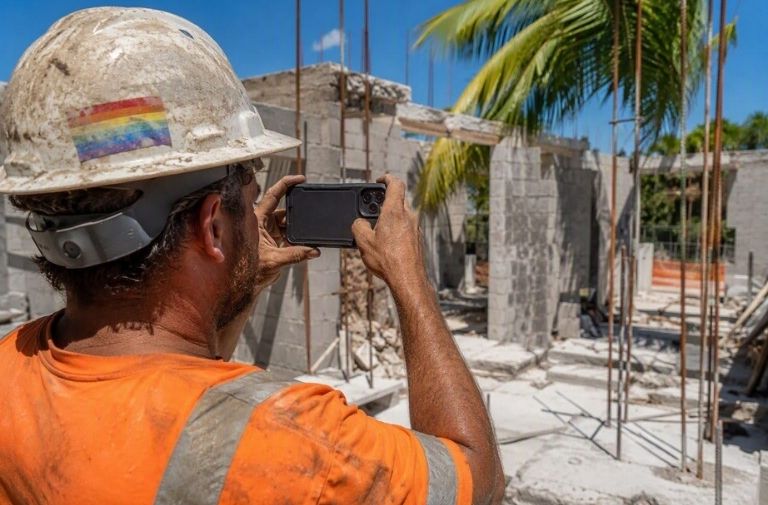
If you're injured on construction site premises in Florida, get out of immediate danger and get medical care. Then tell a supervisor and preserve whatever you can without risking further harm. What you say and save during the first few days can affect your medical treatment and your workers' compensation. It can also affect any claim involving another company.
You may need to control who receives medical updates or pick a contact method that feels safe. You might also want help in your preferred language. Those concerns are real, and this guide addresses them directly.
Injured on Construction Site Premises? The Short Answer
First, deal with immediate danger and medical needs. Get clear of energized equipment or unstable structures before anything else.
Then tell a supervisor as soon as you can. Describe the work event accurately, and keep copies of every message plus your medical paperwork.
You don't have to explain your sexual orientation, gender identity, transition care, or personal relationships just to report how an accident happened. Accurate legal identification or relevant medical history may be needed for forms and treatment. Nothing more.
Get Medical Care and Create an Accurate Initial Record
Leave the danger area and request emergency help
Don't stay near unstable structures or energized equipment to collect evidence. Don't stay near moving machinery or falling-object hazards either. Evidence can wait. Your body can't.
For a severe injury, call 911 or ask one specific person to call. Heavy bleeding or breathing trouble means emergency care right now. A suspected spinal injury or crushing trauma does too. Severe burns count as well.
If a coworker may have a neck or spinal injury, avoid moving them unless an immediate hazard makes staying in place more dangerous. Follow the emergency dispatcher's instructions while waiting for help.
Tell the medical provider that the injury happened at work
Say the injury happened at work. Describe the mechanism precisely, such as a fall from a ladder or a hand pulled into machinery. Also mention if material struck you. Avoid exaggerating. Avoid minimizing your symptoms as well.
The first medical record matters because it links your condition to the work event. It also captures symptoms that may change or worsen later.
Florida's workers' compensation system can require authorized medical treatment under Florida Statutes § 440.13. A genuine emergency is different. Go to the ER if you need to.
Report the Construction Injury Promptly in Florida
Give notice to a supervisor
Here's how to report a construction injury in Florida: start with a supervisor or foreperson. A superintendent or safety manager works too. Any employer representative with authority to receive reports counts.
Under Florida Statutes § 440.185, an injured employee generally must notify the employer within 30 days after the injury becomes apparent, subject to statutory exceptions. But prompt reporting is safer than waiting for the deadline. Delays invite disputes about when and where the injury happened.
Give the date and approximate time. Add the job-site location and the task underway. Name the body parts affected, and don't speculate about fault.
Put the report in writing
If your first report was verbal, follow it with a dated email or text message. An incident form works too. Keep a copy outside any employer-controlled account. Use your personal email or phone.
Need a model sentence? Try this:
"I am confirming that I injured my right shoulder while carrying materials at the project on [location] at about [time] on [date], and I am requesting instructions for medical care."
Preserve proof if someone refuses the report
Note who received your report and exactly when. If a supervisor refuses to document it, send a factual written notice to another employer contact. Keep proof of delivery.
Never sign a blank or inaccurate incident report. If you're handed something you don't understand, ask for time to read it. Ask for language assistance too.
Document the Accident Without Putting Yourself at Risk
Photograph conditions that may change
Here's how to document a construction site accident safely. If you're physically able and permitted, photograph the accident area and the equipment involved. Capture the guards, debris, lighting, and warning signs. Photograph your visible injuries too, and note the weather conditions.
Don't trespass or interfere with emergency work. Don't return to an unsafe scene for a better photo.
Your evidence checklist
- Photos or video taken lawfully and safely
- Names and contact details for witnesses
- Texts, emails, schedules, and work assignments
- Medical records, discharge papers, and prescriptions
- Pay records and dates of missed work
- Clothing, protective gear, or damaged personal items
Identify records controlled by other parties
Surveillance video doesn't stay on the server forever. Neither do access logs or equipment inspection records. Subcontractor assignments, toolbox-talk records, and machine data can disappear as well.
Write down what may exist and where. Don't take confidential company files, and don't alter any equipment. Make a list for later.
Know the Florida risk picture
Florida recorded 92 fatal construction injuries in 2023, according to the U.S. Bureau of Labor Statistics Census of Fatal Occupational Injuries state data. Falls, slips, and trips accounted for 43 of those deaths.
These are fatal-event statistics, not a count of every nonfatal injury. The distinction matters. Most falls aren't fatal, but every fall deserves documentation before the scene changes.
Protect Privacy and Ask for Language Support
Control unnecessary personal disclosure
LGBTQ worker privacy after a workplace injury starts with controlling what you disclose. An incident report needs facts about the work event and injury, plus your contact information. It does not ordinarily require an explanation of unrelated personal matters. That includes your sexual orientation, gender identity, transition care, and family circumstances.
Give a safe phone number or email address. A worker who fears that a voicemail on a shared phone could out them to a housemate can ask the claims contact to use text or email instead. The worker can also ask that mailed documents go to an address they control.
State your chosen name and pronouns where a legal name isn't required on the form. Supply your legal name when a formal form or insurer requires it.
Pick a trusted emergency contact. Clarify with the provider what information may be shared with that person.
Document slurs, threats, deliberate misgendering, involuntary disclosure, or different treatment separately if they happen during reporting or your return to work. Save existing messages, but don't secretly record private conversations without legal advice. Florida's interception law, Florida Statutes § 934.03, can make covert recording legally risky.
No one can promise complete confidentiality. Certain identifying and medical information may be required. You can still request discreet communications and limit unnecessary personal disclosures.
A friend or partner isn't your legal representative unless that person holds valid authority. Don't describe them as one.
Request interpretation before signing
If you need language assistance in South Florida, request an interpreter or translated explanation before you sign anything you don't understand. That applies to an incident report, medical form, release, or settlement document.
A bilingual coworker can help with basic communication. Sensitive medical or legal discussions may call for a qualified interpreter instead. Keep copies of every document in every language you receive.
Florida Workers Compensation for Construction Workers: What to Know
What the system may address
Florida workers' compensation may provide authorized medical care and partial wage-replacement benefits for a covered work injury. You usually don't have to prove your employer was negligent. Eligibility and benefits still depend on the facts, including employment status and medical findings. The compensability framework sits in Florida Statutes § 440.09 and § 440.13.
Why worker classification can become disputed
Job-site labels don't necessarily settle legal status. Florida's statutory definitions govern whether someone qualifies as an employee for workers' compensation purposes under Florida Statutes § 440.02. A worker labeled an independent contractor may still need a fact-specific coverage analysis. Don't assume a subcontractor label or cash payment automatically eliminates every option. If classification or immigration status may affect a claim, seek advice based on the specific facts rather than assuming no remedy exists.
What to do if the employer stays silent
Document every unanswered call and message. Don't pay a nonemergency provider and assume reimbursement is guaranteed. Keep your appointments and follow your work restrictions.
Consider Third Party Construction Accident Claims in Florida
A different company may have contributed to the accident
Workers' compensation isn't the only possible path. Third-party construction accident claims in Florida rest on Florida Statutes § 440.39, which preserves claims against legally responsible third parties.
A third party could be an equipment manufacturer, property owner, vehicle operator, or separate subcontractor, but only when the facts support a legal duty and wrongful conduct. A general contractor, property owner, or other business is not automatically liable merely because its people or equipment were present at the site.
Say a rented lift failed or a delivery driver created the hazard that hurt you. The evidence you preserve at the scene helps determine whether another company shares responsibility, and the same issue arises when a worker is hurt on a Florida construction site accident. Furmanski Law Group's South Florida practice breaks down how these third-party cases work alongside a workers' comp claim.
Evidence can clarify which company controlled the hazard
Uniforms and vehicle markings identify businesses. Equipment labels and delivery tickets do too. Photograph project signage, and ask witnesses which companies they worked for.
Florida Statutes § 440.10 affects contractor and subcontractor relationships, including coverage and immunity. Don't assume the general contractor always pays. Responsibility turns on the contracts, site control, and evidence showing what created the hazard.
Frequently Asked Questions
Which incidents cause the most construction deaths in Florida?
The terms "injury" and "accident event" aren't interchangeable. In the 2023 federal data cited above, fall-related events led the fatal-event categories in Florida, ahead of transportation incidents and struck-by events.
Who may be responsible when a contractor gets hurt?
Workers' compensation responsibility may rest with an employer or statutory employer under Florida Statutes § 440.10. A separate business may face liability under § 440.39 if its conduct caused the injury. The answer depends on the employment relationships, contracts, site control, and evidence showing what created the hazard. An independent-contractor label does not, by itself, resolve the coverage question.
Does OSHA have a "20/20 rule" for construction?
No. OSHA has no universal construction standard formally called the "20/20 rule." People may be mixing up different requirements. One is the 20-foot power-line assessment distance for certain crane operations under 29 C.F.R. § 1926.1408. Another is the engineering requirement for excavations 20 feet deep or more under 29 C.F.R. § 1926.652. Identify the operation before relying on the phrase.
What constitutes an OSHA-recordable construction injury?
An injury or illness can be recordable when it's work-related and results in a listed outcome. That could be death, days away from work, restricted duty, or a job transfer. Medical treatment beyond first aid, loss of consciousness, and a significant diagnosis can also qualify. "Recordable" doesn't mean the employer must call OSHA about every case. The test comes from 29 C.F.R. § 1904.7.
How is a minor construction injury classified?
"Minor injury" isn't a dependable Florida workers' compensation category. OSHA separately defines first aid for federal recordkeeping under 29 C.F.R. § 1904.7(b)(5). Pain that seems limited at first can still require evaluation or worsen later. Report the event accurately instead of diagnosing yourself.
When must an employer notify OSHA about a serious injury?
An employer generally must report a work-related fatality to OSHA within eight hours. An inpatient hospitalization, amputation, or loss of an eye generally must be reported within 24 hours after the employer learns of the reportable event. That's the employer's direct duty under 29 C.F.R. § 1904.39. It's separate from your duty to notify a supervisor under Florida workers' compensation law.
Protect your health first, then create a clear record of what happened and who received notice. Careful documentation also gives you room to address privacy, language access, workers' compensation, and possible third-party responsibility without making rushed assumptions.
The views, opinions, and recommendations expressed in this article are solely those of the author and are provided for informational and editorial purposes only. They do not constitute professional advice and should not be relied upon as such. OutSFL makes no representations or warranties regarding the accuracy, completeness, or applicability of the content and assumes no liability for any actions taken based on it. The views expressed do not necessarily reflect those of OutSFL.