

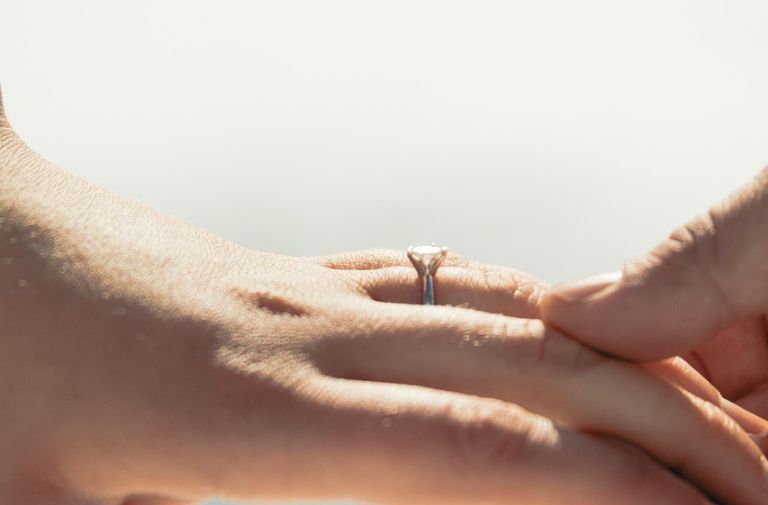
Most people proposing assume they need to pick a ring alone, browsing cases under fluorescent lights while a sales associate hovers nearby. The reality looks different. According to The Knot's 2024 Jewelry & Engagement Study, 77% of proposees had some involvement in selecting their ring. The solitary, sweaty-palmed shopping trip is no longer the default.
Designing a ring means making a series of small decisions that add up to something personal. The process requires knowing what your partner actually wears, what stones appeal to them, and how much you can spend without causing problems elsewhere in your life. None of this needs to happen fast.
Learning What They Want Without Asking Directly
People leave clues. Look at the jewelry your partner already owns. Note the metal color, the weight, the level of ornamentation. Someone who wears thin gold chains and small studs probably does not want a chunky platinum setting with side stones.
Friends and family often hold useful information. A sibling might know about a Pinterest board. A close friend might recall a comment made while walking past a store window. These conversations should feel casual, not like interrogations.
If your partner has mentioned ring preferences before, write them down somewhere you will not lose them. Memory is unreliable when pressure enters the picture.
Starting With a Blank Slate
Some couples begin the design process without a pre-made setting in mind. Working from scratch allows full control over proportions, metal weight, and stone placement. Custom engagement rings follow a path where the jeweler builds a CAD model based on your input, often completing the piece in two to six weeks depending on detail. Heirloom resets, where an old family stone gets a new setting, follow a similar timeline.
This approach works well when standard sizes or styles fall short. A partner with smaller hands may need a lower profile band, while someone preferring geometric lines might request a bezel setting over prongs.
Picking a Stone Shape
The shape of the center stone affects everything else about the ring's appearance. Oval cuts remain the most requested, according to industry reports, though marquise shapes are gaining ground in 2025. Cushion cuts offer a softer look, while east-west settings turn traditional shapes sideways for a different effect.
Each shape interacts with light in its own way. Round brilliants maximize sparkle. Emerald cuts show fewer flashes but reveal more of the stone's interior. Ask to see several shapes in person before settling on one.
The 4 C's and What Actually Matters
Jewelers discuss cut, clarity, color, and carat when presenting stones. Cut determines how well the stone returns light. Clarity refers to internal flaws. Color grades range from colorless to faintly tinted. Carat measures weight.
Cut tends to have the largest impact on appearance. A well-cut stone with slight inclusions often looks better than a poorly cut stone with perfect clarity. Most inclusions cannot be seen without magnification anyway.
Color matters more in certain settings. Yellow gold can mask lower color grades. White gold or platinum makes any tint more visible.
Lab-Grown or Mined
Lab-grown diamonds now account for over 45% of engagement ring purchases in the United States. A 1-carat lab-grown stone averages around $1,000 or less, compared to roughly $4,200 for a mined equivalent. The price gap runs between 80% and 95%.
Both types are chemically identical. The difference lies in origin and resale value. Mined stones hold their value better over time. Lab-grown stones allow buyers to afford larger carat weights or higher grades within the same budget.
Your partner may have a preference. Some people care about origin. Others do not.
Choosing the Setting
The setting holds the stone in place and defines the ring's overall style. Prong settings lift the stone and let light pass through. Bezel settings wrap metal around the stone's edge, offering more protection. Three-stone designs feature a center stone flanked by two smaller ones.
Band thickness affects comfort. Narrow bands feel lighter but may show wear faster. Wider bands feel more substantial but can overwhelm smaller hands.
Getting the Size Right
Borrowing a ring your partner already wears on that finger gives the most accurate measurement. If borrowing is not possible, trace the inside of the ring on paper or press it into a bar of soap.
Most jewelers resize rings after the fact. Sizing down removes material. Sizing up stretches the band or adds it. Both processes have limits. Getting close the first time prevents complications.
Budgeting Without Regret
Spend what you can afford to spend. The old rule about two or three months' salary has no basis in anything except marketing. Your rent still needs paying. Your car still needs fuel.
Financing a ring introduces interest payments. Paying cash means spending money you actually have. Many jewelers offer layaway programs that allow you to pay over time without interest.
Decide your maximum number before entering any store. Pressure exists in those rooms. Having a firm limit protects you from decisions that feel good in the moment and bad three months later.
Finalizing the Design
Once you have selected a stone, a setting, and a metal, the jeweler produces a rendering or a wax model. Review it carefully. Check proportions against photographs of your partner's hand if possible.
Ask about warranties and return policies. Understand what happens if the stone loosens or the band cracks. Get documentation for the stone's specifications.
The ring arrives. You propose. The rest is up to both of you.