

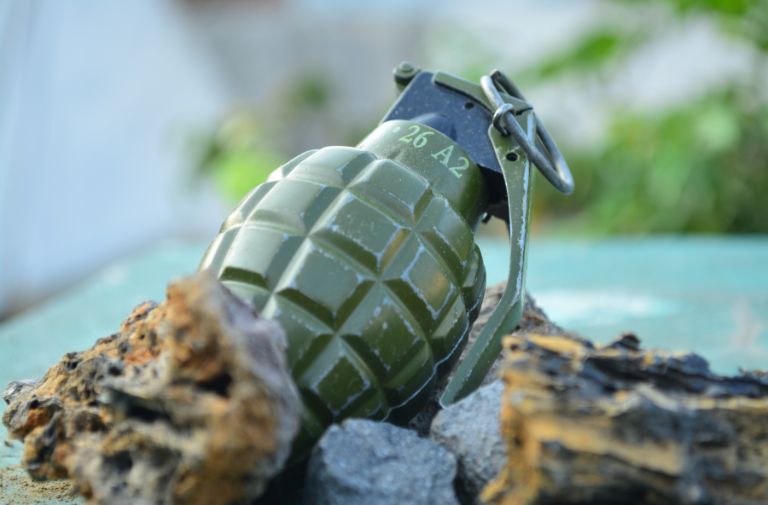
Grenade launcher systems have become increasingly important in the latest tactical scenarios. They provide more firepower along with higher precision and safety. This article aims to give you insight into the reasons why they continue to be dependable solutions for professionals.
How Do Grenade Launcher Systems Work?
In its most basic form, these systems contain a firing mechanism that launches a grenade over distances. Pressing the trigger causes a firing pin to move and hit a primer. The primer ignites the propellant, which fires the grenade away from the thrower or tube with controlled speed. It enables personnel to address threats at distances much further than conventional firearms would be able to reach.
Types of Grenade Launchers
There are numerous designs for grenade launchers available for various missions. A single-shot launcher, like the M79 grenade launcher, is simple and works without fail. In terms of speed, multi-shot models are great for rapid follow-up shots during a high-stress operation. IoB (In-Over-barrel) and under-barrel variants directly attach to a rifle, which means the owner doesn't need to pull out any separate equipment to use the device, as the launcher is part of the weapon. Another popular type, ICCS (Integrated Combat Weapon Sites), is also a weapon that is mounted to another firearm and not utilized separately.
Ammunition Varieties and Their Uses
Ammunition types differ and are suited to different jobs. The standard high-explosive rounds will neutralize enemy positions or disable vehicles. Smoke grenades provide teams with visual cover to maneuver without being seen. Non-lethal means, like rubber bullets or tear gas, aid riot suppression and peacekeeping. Training rounds allow for practice without live explosives.
Loading and Firing Procedures
The procedures for reloading depend on the design of the launcher. With break-action launchers, the barrels open up so the operators can reload them with a new round. With revolving-cylinder systems, chambers rotate after every shot, and reloads can be done more quickly. Correct handling would mean reliability and fewer malfunctions. Engaging safeties or clearing barrels during stressful moments prevents accidents.
Tactical Advantages in the Field
The use of grenade launchers comes with several tactical advantages. This allows personnel the ability to attack threats from higher protected positions. Area suppression capabilities deny people the ability to move, and they will deter any advancements by an enemy. They are capable of breaking down barriers, like walls or vehicles, even from a distance. Teams can use smoke or illumination rounds to make the environment advantageous for their movements.
Training and Proficiency Requirements
Grenade launchers must be used carefully, only after adequate training. An operator must learn ballistics, how to aim, and the safe handling of a weapon. Practicing in drills builds muscle memory and instinctive reaction to pressure situations. Use of this weaponry can cause unintended damage, but if used properly, success on the mission becomes promising. Proper training ensures that teams do not pick innocent targets.
Maintenance and Longevity
Maintenance extends the lifespan of a grenade launcher. By cleaning after each use, you eliminate any residue that may accentuate wear or cause malfunction. Barrels must be inspected for cracks, worn parts, and debris. Lubricating moving components helps lower friction and allows ease of operation. Regular maintenance also helps catch problems early to keep the system reliable during those critical moments.
Integration With Tactical Teams
Grenade launchers are infrequently used on their own. They are complementary in their use across teams. The leadership finds out the roles that are expected in the mission, assigns grenadiers a position to play, ensuring that they provide support to the riflemen or the machine gunners as required. These shared tactics ensure safe units and multiply the effects of their actions.
Adaptability to Various Environments
These systems work in a variety of environments. Grenade launchers can overcome obstacles in urban environments, such as walls and vehicles. Indirect fire reaches hidden enemies in forested areas. The longer range and flexibility of these launchers are an advantage in desert or mountainous terrain. By using the right ammo, you can change your rounds as conditions change.
Conclusion
Grenade launcher systems support modern tactical operations. When experts are always met with extreme challenges from various directions, it is the versatility, the firepower, and the adaptability of the tool that prove valuable. Regular maintenance and calibration ensure these systems stay capable as well as effective for each mission. Knowing how these things operate ensures intelligence, safety, and overall better performance in demanding situations.
The views, opinions, and recommendations expressed in this article are solely those of the author and are provided for informational and editorial purposes only. They do not constitute professional advice and should not be relied upon as such. OutSFL makes no representations or warranties regarding the accuracy, completeness, or applicability of the content and assumes no liability for any actions taken based on it. The views expressed do not necessarily reflect those of OutSFL.