

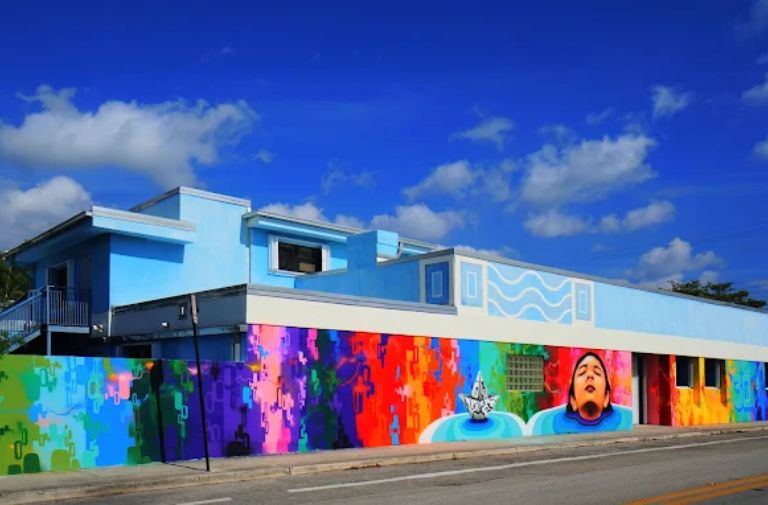
Although L hadn’t intended on staying in South Florida when he flew down in February for a short vacation, something clicked.
“I was feeling something I’d never felt before,” he said. “Whatever was happening here, I couldn’t ignore it.”
When he told a staff member at Compass, the local LGBTQ community center where he had been volunteering, that he planned to live in his car just to stay in the area, help was offered.
So, L stayed. Since May, he has been navigating housing instability, rotating parking lots, and finding creative ways to manage hygiene, food, and medical care while living out of his car.
A gay trans man in his early 30s, L speaks candidly about the layers of complexity that come with being unhoused and queer. From planning which Planet Fitness locations have 24-hour bathrooms to managing hormone therapy in the Florida heat, L's experience reflects the quiet calculations required to survive — and maintain dignity — without permanent shelter.
“I can’t look homeless,” he said. “Because we know how people perceive someone who’s presumably unhoused. There’s this instant downgrade in their opinion.”
For LGBTQ people, the experience of homelessness is often shaped not just by economic precarity, but by safety concerns and social stigma. According to the National Alliance to End Homelessness, young adults aged 18-24 who identify as gay or transgender are twice as likely to experience homelessness compared to straight young adults.
And for trans adults like L, using the bathroom while homeless is not just a logistical hurdle.
“I don’t have the luxury, being trans, of just using the bathroom in a normal way like I just hike up against the tree,” L said. “I don’t have that option.” He said he prefers to drive somewhere to use the bathroom so he doesn’t have to risk outing himself.
Compass, where L still volunteers regularly, offers a range of services to help LGBTQ+ individuals experiencing housing instability. According to Latisha Gonzalez, the organization’s Program Marketing and Media Director, Compass provides access to computers for job and benefits applications, harm reduction supplies, mental health referrals, HIV testing, and connections to partner organizations in the community,
“Unfortunately, there’s not a lot of funding for housing at this moment, so we do as much as we can with the resources that we have available,” Gonzalez said.
Despite limited funding, the center remains a hub for connection. For L, it’s been a lifeline, not only for tangible resources, but for a sense of belonging.
“I’ve been doing this a long time, very alone, very stealth, very let me blend in and just get along. I made it over 30 years without a community, so maybe I didn't need one,” L said. “But whatever feeling I was having, I was like ‘I have to have more of this,’ because it’s giving me something that’s making me feel very whole, very well rounded.”
That sense of purpose has become the reason L stays, even through 90-degree nights in a car and food budgeting that leaves just two dollars a day. L continues to volunteer, share knowledge, and build community, even when others don’t know he’s doing it all without a home.
“I don't want to be defined by it or treated differently by it,” L said. “I do a lot of the volunteering, but I don't want to ever be in a situation where anything feels transactional. I'm doing things because I want to do things, and I just happen to sleep in my car.”
Still, the reality is fragile. One parking citation, one impounded car, one missed testosterone shot, and everything could unravel.
“There's a lot tied up in that, having my car, having the mobility,” L said. “That my whole life's in there.”
“I have to be doing shots weekly for the rest of my life,” L continued. “If my whole stash was lost, my body would fall apart very, very quickly.”
And yet, L remains grounded by conviction.
“I get asked, ‘Do you think you're going to still be doing this a year from now?’ And I was like, ‘I don't know what I'm going to be doing a week from now,’” L said. “As long as I'm still doing something that feels purposeful, I'm going to keep doing that thing.”